
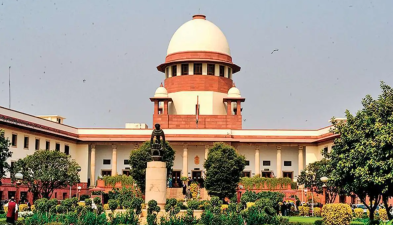
The Supreme Court Collegium, headed by Chief Justice of India Surya Kant, recommended the elevation of nine advocates as judges of the Calcutta High Court during its meetings on 11 and 12 May 2026. This recommendation marks a critical step toward addressing structural vacancies at the oldest High Court in India, which recorded 30 vacant judicial seats against a sanctioned strength of 72 as of May 2026. The list of recommended legal professionals comprises Indranil Roy, Aryak Dutt, Atarup Banerjee, Sandip Kumar De, Partha Pratim Roy, Sudip Deb, Anuj Singh, Arjun Ray Mukherjee, and Rishad Medora. The proposal will advance through the Union Ministry of Law and Justice for executive vetting before reaching the President of India for formal executive appointment.
Constitutional and Institutional Framework of High Courts
High Courts occupy a pivotal position in the single integrated judicial system of India, possessing extensive original, appellate, and supervisory jurisdictions.
Jurisdictional Mandate
The Calcutta High Court was established in 1862 under the High Courts Act of 1861, making it the oldest chartered high court in the country. It exercises territorial jurisdiction over the State of West Bengal and the Union Territory of the Andaman and Nicobar Islands. A permanent circuit bench operates at Port Blair to ensure accessible justice for the island territory.
Appointment Authority and Eligibility
Article 217 of the Constitution of India dictates that every Judge of a High Court shall be appointed by the President by warrant under his hand and seal. To qualify for elevation as a High Court judge, a person must be a citizen of India and must meet either of these criteria:
- Held a judicial office in the territory of India for at least ten years.
- Practiced as an advocate in a High Court or two or more such courts in succession for at least ten years.
The Evolution of the Collegium System
The mechanism for appointing judges to the higher judiciary is an administrative invention developed through a series of Supreme Court rulings known as the “Judges Cases,” rather than a body created by specific legislative statutes or explicit constitutional text.
First Judges Case (1981)
In S.P. Gupta v. Union of India, the Supreme Court held that the term “consultation” used in Articles 124 and 217 does not mean “concurrence.” This ruling gave the executive ultimate primacy over judicial appointments, allowing the central government to override judicial recommendations.
Second Judges Case (1993)
In Supreme Court Advocates-on-Record Association v. Union of India, a nine-judge bench reversed the earlier position. The court ruled that “consultation” signifies “concurrence.” This decision shifted the balance of power, giving the judiciary the decisive say in appointments and giving birth to the institutional Collegium system. The judgment specified that the Chief Justice of India must form recommendations in consultation with the two senior-most colleagues.
Third Judges Case (1998)
Following a presidential reference under Article 143, the Supreme Court expanded the configuration of the Collegium. For Supreme Court appointments, the panel grew to include the Chief Justice of India and four senior-most puisne judges. For High Court elevations, the panel consists of the Chief Justice of India and the two senior-most judges of the Supreme Court.
Procedure for High Court Appointments
The step-by-step processing of judicial nominations relies on an administrative framework outlined in the Memorandum of Procedure (MoP).
Initiation at State Level
The proposal for appointing High Court judges originates from the Chief Justice of the respective High Court, who forms a consensus with the two senior-most judges of that specific court. This recommendation is sent to the Chief Minister of the state, who forwards the file along with the Governor’s comments to the Union Minister of Law and Justice.
Evaluation by Supreme Court Collegium
The Union Law Ministry receives the proposal, obtains background verification intelligence reports from the Intelligence Bureau (IB), and compiles the complete dossier. This file is then placed before the Supreme Court Collegium. The panel evaluates the professional competence, integrity, and suitability of the candidates.
Executive Assent and Publication
The approved names are transmitted to the Prime Minister, who advises the President regarding the selection. The process concludes when the President signs the dynamic warrants of appointment. The Department of Justice under the Ministry of Law and Justice subsequently publishes the mandatory notification in the Gazette of India, making the appointment official.
Issues Associated with Judicial Appointments
The current alignment of judicial appointments continues to face structural questions and operational friction between the state organs.
Lack of Transparency
The selection process faces regular criticism for functioning as a closed-door mechanism. Critics point out that the absence of structured criteria for shortlisting candidates, combined with a lack of public disclosure regarding evaluation parameters, limits the institutional accountability of the system.
Executive-Judiciary Standoffs
The Memorandum of Procedure does not specify a rigid timeline for the executive to clear names recommended by the Collegium. The government can return recommendations for reconsideration. If the Collegium unanimously reiterates the same names, the executive is bound by law to accept them. However, instances of long administrative delays in clearing reiterated files create regular institutional bottlenecks.
High Vacancy Rates
Delays across the multi-layered approval pipeline leave a significant percentage of sanctioned judge positions unfilled. These prolonged vacancies lower the active handling capacity of courts, driving up the volume of pending litigations.
IASPOINT Booster Facts for UPSC
- Article 214: Mandates that there shall be a High Court for each State, though Article 231 empowers Parliament to establish a common High Court for two or more States or Union Territories.
- Oath of Office: High Court judges take an oath or affirmation before the Governor of the State, or a person appointed by the Governor for this purpose, in accordance with the Third Schedule of the Constitution.
- Tenure and Removal: A High Court judge holds office until attaining the age of 62 years. A judge can be removed from office by an order of the President, passed after an address by Parliament supported by a special majority in both Houses on grounds of proved misbehavior or incapacity.
- NJAC Attempt: Parliament enacted the 99th Constitutional Amendment Act and the National Judicial Appointments Commission (NJAC) Act in 2014 to replace the Collegium with a transparent body. The Supreme Court struck down both laws as unconstitutional in 2015, ruling that they violated the basic structure of the Constitution by compromising judicial independence.
- Salary and Pensions: The salaries and allowances of High Court judges are charged to the Consolidated Fund of the State, whereas their retirement pensions are charged directly to the Consolidated Fund of India. This arrangement ensures that state legislatures cannot manipulate post-retirement financial security to pressure sitting judges.
- Transfer Protocol: Article 222 empowers the President to transfer a judge from one High Court to any other High Court after consulting the Chief Justice of India.