
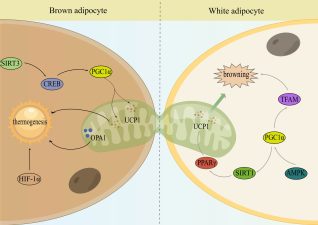
Scientists are revisiting the cell’s energy machinery to address one of the world’s fastest-growing health challenges — obesity. Researchers in Australia have developed experimental molecules that coax mitochondria, the cell’s energy centres, to burn more calories by wasting energy as heat. While still at an early stage, the work opens a potentially transformative pathway for obesity and metabolic disease treatment.
How mitochondria control energy use
Mitochondria are often described as the “powerhouses” of cells because they convert nutrients from food into adenosine triphosphate (ATP), the chemical energy that drives nearly all cellular processes. This conversion is usually efficient: most of the energy stored in food is captured as ATP, with only a small fraction released as heat.
The new research focuses on disrupting this efficiency in a controlled way. By making mitochondria work harder for the same energy output, cells are forced to burn more fats and calories to meet their needs.
What are mitochondrial uncouplers?
The molecules studied are known as mitochondrial uncouplers. These compounds interfere with the normal coupling between nutrient breakdown and ATP production. Instead of energy being neatly stored as ATP, a portion is released as heat.
This idea is not new. Mitochondrial uncouplers were discovered nearly a century ago, but early versions proved extremely dangerous. They caused uncontrolled heat generation, leading to severe overheating and death, which halted their medical use.
Designing safer, “mild” uncouplers
The recent work, led by researchers from the , describes a new class of “mild” mitochondrial uncouplers. By precisely modifying the chemical structure of experimental molecules, the team was able to finely tune how strongly energy production is disrupted.
According to lead researcher Tristan Rawling, these mild uncouplers slow energy conversion only to a level that cells can tolerate, avoiding the dangerous overheating seen with older compounds. This balance allows cells to increase fat consumption without triggering toxic side effects.
Beyond weight loss: wider metabolic benefits
An important finding of the study is that mild mitochondrial uncoupling also reduces oxidative stress inside cells. Oxidative stress, caused by excess reactive oxygen species, is linked to metabolic disorders, ageing and neurodegenerative diseases.
By lowering this stress, the compounds could potentially improve overall metabolic health, offer anti-ageing benefits and provide protection against conditions such as dementia. These additional effects make mitochondrial uncouplers relevant not just for obesity, but for a broader range of chronic diseases.
Scientific significance of the discovery
The study, published in the journal , offers more than a single drug candidate. It provides a framework for understanding how subtle chemical changes influence mitochondrial behaviour, helping scientists design safer energy-modulating drugs in the future.
This improved mechanistic understanding explains why some uncouplers are lethal while others can be beneficial, marking a key step forward after decades of stalled research in this area.
What lies ahead for such therapies
Despite the promise, researchers stress that the work remains experimental. Extensive testing in animals and humans will be required to establish safety, dosage and long-term effects. Regulatory approval, if achieved, would still be years away.
Nonetheless, the study signals a shift in obesity research — from targeting appetite or nutrient absorption to directly modulating how cells use energy. If successful, mild mitochondrial uncouplers could represent a new class of metabolic drugs with applications far beyond weight loss.
What to note for Prelims?
- Mitochondria generate ATP through efficient energy conversion
- Mitochondrial uncouplers release energy as heat instead of ATP
- Early uncouplers were toxic; new research focuses on “mild” uncoupling
- Obesity treatment is moving toward cellular energy regulation
What to note for Mains?
- Link between cellular metabolism and non-communicable diseases
- Scientific challenges in balancing efficacy and safety of metabolic drugs
- Potential of mitochondrial research for obesity, ageing and neurodegeneration
- Importance of translational research from lab to public health impact