
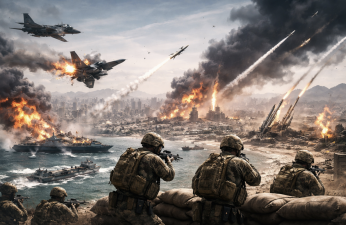
The downing of two US military aircraft—an F-15E Strike Eagle and an A-10 Warthog—by Iranian air defenses in April 2026 marks a turning point in global geopolitics. This escalation, part of the U.S.-led “Operation Epic Fury” targeting Iran’s nuclear and military infrastructure, marks a shift in modern warfare. Beyond a regional conflict, it signals an era where traditional air superiority is challenged by low-cost, advanced asymmetric tactics.
The Changing Nature of Modern Warfare
The 2026 Iran-US conflict shows how warfare has evolved from conventional dominance to Contested Multidomain Warfare. Despite technological and economic gaps, Iran’s success in downing advanced US jets proves that control of the skies is no longer guaranteed.
- Asymmetric Denial and Anti-Access (A2/AD): Iran combines sophisticated surface-to-air missile (SAM) systems with swarms of kamikaze drones and ballistic missiles. This “porcupine strategy” raises the cost of intervention, making it risky for expeditionary forces.
- The Drone-Missile Symbiosis: Modern conflict has moved beyond traditional tank or jet battles. Iran launched over 2,500 unmanned aerial vehicles (UAVs) and ballistic missiles targeting US bases in Qatar, Bahrain, and Kuwait. The sheer volume overwhelms even advanced Aegis and Patriot missile defenses.
- Targeting the Global Commons: Warfare now extends beyond battlefields. By threatening the Strait of Hormuz—through which nearly 20% of global oil passes—and disrupting subsea cables and energy infrastructure, regional actors use economic power as a weapon, causing global ripple effects that diplomacy struggles to address.
Implications for Global Security Architecture
The failure of the US “Security Umbrella” in the Gulf has shaken the post-WWII security order, revealing cracks in centralized security models.
- Erosion of the Unipolar Security Model: The US’s inability to guarantee zero-risk security to Gulf allies like Saudi Arabia and the UAE has sparked a crisis of confidence. These countries increasingly adopt “multi-alignment,” engaging with China and Russia to hedge against potential US withdrawal or failure.
- Obsolescence of Traditional Arms Control: The collapse of the JCPOA and the 2026 war show that 20th-century non-proliferation treaties struggle to contain modern technological proliferation. Regional powers developing indigenous missile programs bypass international sanctions, weakening traditional denial regimes.
- Weaponization of Energy and Trade Routes: Brent crude prices surged above $105 per barrel in April 2026, proving that regional instability triggers immediate global economic shocks. This shifts global security focus from territorial defense to supply chain resilience.
The Strategic Lesson – Strategic Autonomy
Emerging powers and the global community are learning that national security cannot be outsourced. The shift from a US-centric security framework in West Asia to a fragmented, multipolar regional order is underway. Future security will rely on a complex network of regional pacts, indigenous defense capabilities—like India’s Atmanirbhar Bharat initiative—and renewed efforts to protect key maritime chokepoints. The downing of US aircraft in 2026 signals the end of the “Golden Age” of uncontested air power. Instead, warfare has become messy, lethal, and hyper-connected, demanding a more inclusive and resilient global security framework.
Last Modified: April 4, 2026