
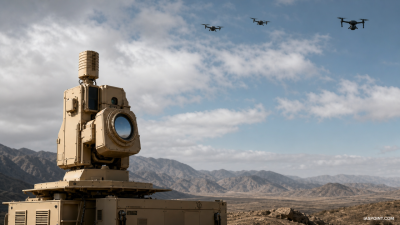
Bhargavastra, an indigenous vehicle‑mounted, multi‑layer counter‑swarm drone system developed by Solar Defence and Aerospace Ltd (SDAL), was demonstrated for the Indian Army at Nagpur on 24 July 2026 under the Make‑II programme status review.
System Overview
- Role: Hard‑kill counter‑drone system designed to detect, track, identify and destroy hostile UAVs and swarms.
- Configuration: Vehicle‑mounted launcher with integrated sensor suite and C4I module.
- Intended integration: Linked to the proposed Sudarshan Chakra layered air‑defence concept (projected ranges: 2.5 km, 6 km, 25 km; target timeline ~2030).
Technical Features
- Kill layers: Dual‑layer mechanism — unguided micro‑rockets (lethal radius ~20 metre) and precision‑guided micro‑missiles (interception up to 2.5 kilometres).
- Detection ranges: Larger UAVs ~10 kilometres; smaller drones ~6 kilometres.
- Sensors: Radars, Electro‑Optical/Infrared (EO/IR) sensors and passive radio‑frequency (RF) detectors for multi‑sensor fusion.
- C4I: Generates real‑time air picture, assigns targets and interfaces with launchers.
- Counter‑swarms: Designed for coordinated neutralisation of multiple simultaneous targets.
Trials and Acquisition Context
- Demonstration: Public display on 24 July 2026; actual firing withheld for safety at that venue.
- Trials timeline: Developer indicated internal trials due within 2–3 months from the demonstration date.
- Make‑II: Defence Acquisition Procedure category for industry‑funded prototype development.
IASPOINT Booster Facts
- EO/IR: Provides day/night imaging, target classification and tracking across visual and thermal bands.
- C4I acronym: Command, Control, Communications, Computers and Intelligence.
- Loitering munitions: Also termed suicide drones; they loiter before impact and are treated separately from counter‑UAV defences.