
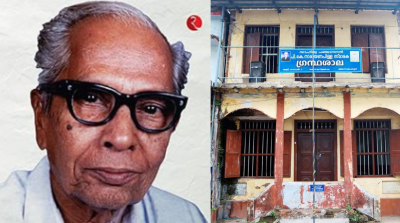
The Vice President of India, C. P. Radhakrishnan, released the book ‘The Library Man of India: The Story of P.N. Panicker’, authored by P. P. Sathyan. The biography honors Panicker’s role in spearheading Kerala’s library and literacy movement. Panicker democratized access to knowledge, transforming social and intellectual life through a network of libraries, especially in rural and tribal areas. During the book release, the Vice President highlighted concerns over declining reading habits caused by digital distractions and emphasized the importance of reviving a culture of deep reading. He also praised government initiatives like “One Nation, One Subscription” and the Gyan Bharatam Mission that strengthen India’s knowledge ecosystem.
Historical Evolution of the Library Movement in Kerala
The library movement in Kerala was a grassroots social reform initiative that directly contributed to the state achieving universal literacy.
Early Foundations and Sanatana Dharmam Library
P.N. Panicker started his work in 1926 in his hometown of Neelamperoor by establishing the Sanatana Dharmam Library. This library served as the initial hub for distributing books among rural communities and marginalized sections of society.
Grandhasala Sangham Establishment
In 1945, Panicker led the formation of the Akhila Travancore Grandhasala Sangham (All Travancore Library Association). The organization started with 47 rural libraries. The network expanded rapidly, prompting a name change to Kerala Grandhasala Sangham after the state of Kerala was formed in 1956. The association adopted the motto ‘Vayichu Valaruka’ (Read and Grow).
Institutional Takeover and KANFED
The Government of Kerala took over the control of the Grandhasala Sangham in 1977 to provide statutory backing. Following this, Panicker founded the Kerala State Literacy Council and the Kerala Association for Non-Formal Education and Development (KANFED). KANFED was highly instrumental in launching the Total Literacy Campaign in Kerala, leading to Ernakulam district becoming the first fully literate district in India in 1990.
National Policy Frameworks and Digital Interventions
The government has introduced several modern initiatives to replicate the democratized learning model of the library movement on a digital scale.
One Nation, One Subscription (ONOS)
ONOS is a central government initiative designed to provide nationwide access to international scientific journals and research papers. The government negotiates a single consolidated subscription fee with global publishers. This allows all public educational institutions, universities, and research laboratories in India to access high-quality academic literature for free.
Gyan Bharatam Mission
The Gyan Bharatam Mission focuses on modernizing public libraries and transforming them into digital knowledge centers. The mission funds the digitization of rare manuscripts, provides high-speed internet connectivity to rural libraries, and develops multilingual digital content repositories to bridge the urban-rural learning divide.
| Initiative | Implementation Objective | Target Beneficiaries |
| National Virtual Library of India (NVLI) | Creates a unified digital portal to harvest and index metadata from all Indian libraries and archives. | Researchers, students, and the general public |
| National Digital Library of India (NDLI) | A virtual repository of learning resources led by IIT Kharagpur, offering single-window search facilities. | All levels of learners from school to post-doctoral researchers |
| Model Public Library Scheme | Provides financial assistance to upgrade infrastructure, install computers, and create separate children’s sections in district libraries. | Rural and semi-urban local communities |
Social and Administrative Impact of Library Networks
The growth of public libraries changed the socio-economic dynamics of rural India by acting as centers for community development.
Democratic Access to Knowledge
Public libraries eliminated institutional barriers for rural and tribal populations. They provided women, laborers, and backward classes free access to books, newspapers, and educational periodicals that were previously restricted to upper classes.
Growth of Political and Civic Awareness
Libraries became community meeting rooms where citizens discussed daily news, socio-political reforms, and local administrative issues. This active engagement fostered high civic awareness and political literacy among the rural populace.
Supporting Lifelong Non-Formal Education
Through organizations like KANFED, the library network served as a venue for adult education programs, vocational skill training, and health awareness campaigns, extending learning opportunities beyond formal school systems.
IASPOINT Booster Facts for UPSC
- National Reading Day: The Government of India declared June 19, the death anniversary of P.N. Panicker, as National Reading Day. The subsequent week is celebrated as Reading Week, and the entire month is observed as Reading Month.
- National Policy on Library and Information Systems (NAPLIS): Formulated in 1986 under the chairmanship of Professor D.P. Chattopadhyaya, this policy provided a blueprint for developing public library networks across India.
- National Mission on Libraries (NML): Launched by the Ministry of Culture, NML works under four core components: upgrading infrastructure, creating the National Virtual Library of India, skill development for library professionals, and conducting quantitative surveys on library usage.
- First Library Act in India: The Madras Public Libraries Act, 1948, was the first formal legislation enacted in independent India to institutionalize the public library system and levy a library cess to fund operations.
- Raja Rammohun Roy Library Foundation (RRRLF): Established in 1972 by the Ministry of Culture, RRRLF is the nodal agency for supporting public library movements and distributing central financial assistance to state library networks.