
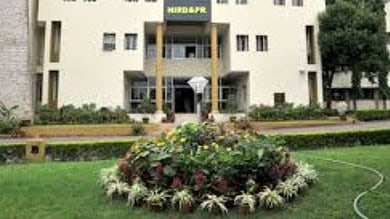
The Parliamentary Standing Committee on Rural Development and Panchayat Raj has recently criticised the Union Ministry of Rural Development’s decision to disengage the National Institute of Rural Development and Panchayat Raj (NIRDPR). The committee’s 10th report, presented in both Houses of Parliament in July 2025, marks serious concerns about the impact of this decision on rural development policy and institutional stability.
Background of NIRDPR
NIRDPR, based in Hyderabad, has been a premier autonomous institution for over 70 years. It specialises in capacity building for rural development officials, elected representatives, financial bodies, and community organisations. The institute has earned global recognition for its research, training, and policy support under the Ministry of Rural Development (MoRD).
Committee’s Criticism of Disengagement
The committee strongly opposed the government’s move to delink NIRDPR from MoRD. It described the action as a fundamental shift away from national priorities. The report warned that the disengagement could undermine the institute’s credibility, dilute its research quality, and disrupt its alignment with rural development goals.
Financial and Administrative Concerns
Contrary to the government’s stated aim of reducing expenditure, the committee noted that disengagement might increase costs. It could shift financial burdens to various agencies with different mandates, complicating oversight and coordination. The report also raised concerns about financial instability potentially forcing NIRDPR away from supporting flagship rural schemes.
Need for Strategic Collaboration
Instead of disengagement, the committee recommended deeper collaboration between MoRD and NIRDPR. It suggested structural reforms, decentralised decision-making, adequate funding, and greater autonomy within the existing framework. This, the committee believed, would enable the institute to thrive and continue its contribution to rural development.
Lack of Institutional Review and Internal Issues
The report brought into light a serious lapse in the disengagement proposal, noting it lacked internal review and external validation. It criticised poor infrastructure maintenance, declining training ratings, and low faculty morale due to unresolved vigilance cases, ad hoc transfers, and delayed promotions. The administration was accused of paralysing the institute over the past four years.
Employee Welfare and Governance
The committee condemned the executive council’s handling of employee issues, including delays in salary and pension payments for serving and retired staff. It called for urgent administrative reforms and recommended constituting a MoRD-led committee to oversee governance and administrative matters at NIRDPR.
Recommendations for Institutional Stability
To restore trust and organisational coherence, the committee urged immediate review and replacement of the current administration. It also advised continuation of existing government grants until stable leadership is ensured. The report stressed the importance of MoRD taking the lead in formulating a strategic plan to sustain NIRDPR’s role in rural development.
Questions for UPSC:
- Discuss in the light of rural development challenges the role of autonomous institutions like the National Institute of Rural Development and Panchayat Raj in India’s governance framework.
- Critically examine the impact of administrative disengagement on public sector institutions. How can strategic collaboration improve institutional effectiveness?
- Explain the significance of decentralised decision-making in enhancing the efficiency of rural development programmes. With suitable examples, discuss its advantages and challenges.
- Comment on the importance of employee welfare and governance reforms in maintaining the credibility of government institutions. Discuss how leadership influences organisational stability.