
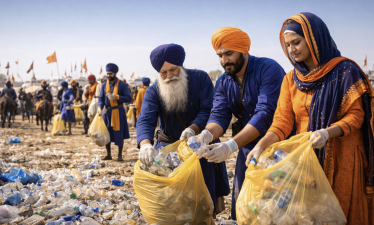
Punjab has launched a focused environmental campaign to make the upcoming Holla Mohalla celebrations free from single-use plastic. The initiative, led by the Punjab Pollution Control Board (PPCB), reflects an attempt to reconcile large-scale religious gatherings with environmental sustainability, especially in a State where single-use plastic is officially banned but continues to surface during mass events.
Holla Mohalla: Cultural and Religious Significance
Holla Mohalla, celebrated annually at Anandpur Sahib and Kiratpur Sahib, is a major Sikh festival that follows Holi. It commemorates martial traditions initiated by Guru Gobind Singh and features religious processions, martial arts displays, kirtans, and large-scale community langars (free kitchens).
The scale of participation runs into lakhs of devotees, which makes waste management a significant logistical and environmental challenge.
The Institutional Push Against Single-Use Plastic
The initiative has been spearheaded by the Punjab Pollution Control Board with support from the Shiromani Gurdwara Parbandhak Committee (SGPC).
Key measures include:
- Appeal by the Jathedar of Sri Akal Takhat Sahib to langar committees to avoid single-use plastic.
- Replacement of disposable plastic items with steel or biodegradable utensils.
- Free distribution of biodegradable plates and bowls by PPCB during the festival.
This convergence of regulatory authority and religious leadership aims to enhance compliance and behavioural change.
Why Plastic Use Spikes During Religious Gatherings
Large gatherings often rely on disposable items for convenience and cost-effectiveness. However, past Holla Mohalla events have witnessed:
- Accumulation of plastic plates and carry bags along roadsides.
- Plastic waste entering drains, fields, and nearby rivulets.
- Overburdened municipal waste systems.
Despite a State-wide ban on single-use plastic, enforcement becomes difficult during temporary high-footfall events.
Environmental and Governance Dimensions
The initiative reflects broader environmental governance themes:
- Implementation challenges of plastic bans.
- Need for behavioural change alongside regulation.
- Community participation in environmental stewardship.
- Integration of faith-based institutions in sustainability efforts.
Religious bodies such as the SGPC play a crucial role in influencing public practices. Their endorsement increases the likelihood of compliance more effectively than regulatory enforcement alone.
Link to National Plastic Waste Framework
India banned several categories of single-use plastic under the Plastic Waste Management Rules. However, enforcement at the local level varies.
Efforts like this:
- Promote biodegradable alternatives.
- Reduce landfill burden.
- Prevent water body contamination.
- Support Swachh Bharat objectives.
The Holla Mohalla campaign could serve as a model for other States managing high-volume religious tourism.
What to Note for Prelims?
- Holla Mohalla is celebrated at Anandpur Sahib in Punjab.
- Single-use plastic is banned under Plastic Waste Management Rules in India.
- PPCB is the statutory body responsible for pollution control in Punjab.
- SGPC manages major Sikh gurdwaras.
What to Note for Mains?
- Discuss challenges in enforcing single-use plastic bans in India.
- Examine the role of religious institutions in promoting environmental sustainability.
- Analyse solid waste management issues during large public gatherings.
- Evaluate how behavioural change complements regulatory frameworks in environmental governance.