
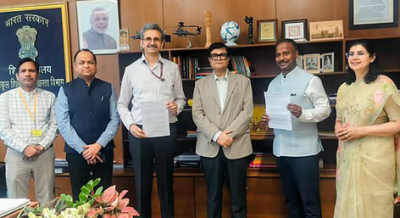
On May 15, 2026, the Union Ministry of Education and the West Bengal government signed a Memorandum of Understanding to implement the Pradhan Mantri Schools for Rising India initiative in the state. The agreement marks a major step forward as West Bengal joins the upgrade program. With this addition, Kerala and Tamil Nadu remain the only two states yet to officially participate in the national project. The overarching objective remains the transformation of over 14,500 government-run schools into model centers of excellence that showcase the multi-faceted features of the National Education Policy 2020.
Core Objectives and Operational Model
The scheme focuses on enhancing the qualitative standard of school education across India over a five-year implementation timeline extending from the fiscal year 2022-23 to 2026-27.
Centrally Sponsored Architecture
The project functions as a Centrally Sponsored Scheme administered under the existing programmatic framework of the Samagra Shiksha Abhiyan, Kendriya Vidyalaya Sangathan (KVS), and Navodaya Vidyalaya Samiti (NVS).
Inter-Governmental Funding Ratios
The financial layout utilizes specific cost-sharing distributions depending on the geographic classification of the participating states or union territories:
- General States and UTs with Legislature: Sixty percent central funding paired with forty percent state matching funds (60:40).
- Northeastern States, Himalayan States, and Jammu & Kashmir: Ninety percent central funding supplemented by ten percent state financing (90:10).
- UTs without Legislature: One hundred percent funding borne entirely by the central government (100:0).
Selection Methodology via Challenge Mode
Rather than distributing allocations arbitrarily, the Ministry of Education applies a transparent, technology-driven, three-stage challenge process to identify institutions for upgrading.
Stage 1: State Commitment
States or Union Territories sign an explicit MoU with the central government, pledging to fully implement the core reforms mandated under the National Education Policy 2020.
Stage 2: Database Screening
A baseline pool of eligible public schools is filtered using verified indicators from the Unified District Information System for Education Plus (UDISE+) platform. Schools must fulfill baseline parameters, including:
- Secure, functional permanent structures (pucca buildings).
- Operational electricity connections and separate toilets for boys and girls.
- Handwashing and safe drinking water infrastructure.
- Pupil enrollment counts exceeding the state average for that category.
Stage 3: Competitive Challenge
Eligible schools compete on specific quality benchmarks through self-application on a dedicated online portal. The physical claims undergo verified inspection by state authorities, after which a high-level expert committee headed by the Secretary of School Education and Literacy makes final selections. The allocation restricts selections to a maximum of two institutions (one elementary and one secondary or senior secondary) per administrative block or Urban Local Body.
Key Features and Pedagogical Pillars
The upgraded institutions function as ecological and administrative templates for the surrounding learning ecosystem.
Green School Practices
The design champions environmental sustainability by mandating clean energy, resource efficiency, and local eco-traditions. Core requirements include:
- Installation of roof-top solar panels and energy-efficient LED light fixtures.
- Dedicated rainwater harvesting networks and systematic plastic-free zones.
- Organic nutrition gardens cultivated via natural farming techniques.
Pedagogy, Assessment, and Digital Integration
The classroom ecosystem shifts away from mechanical rote memorization toward interactive, inquiry-driven, and experiential learning methods.
- Competency-Based Evaluation: Continuous formative assessments that isolate and measure verbal, quantitative, and logical reasoning skills instead of year-end testing.
- Modern Labs and Classrooms: Deployment of specialized smart classrooms, digital libraries, integrated science labs, and Atal Tinkering Labs.
- Tracking Progress: Every enrolled student receives a unique registration identification number, feeding data directly into a dedicated tracking system to trace lifelong progress.
- Community Connection: Unutilized infrastructure remains open after official school hours for community volunteer activities and local adult training, operating under the title of a “Samajik Chetna Kendra.”
| Administrative Metric | Operational Specification |
| Nodal Ministry | Union Ministry of Education |
| Target Scale | Upgrading over 14,500 government schools |
| Project Lifespan | 2022-23 to 2026-27 (5 Years) |
| Total Estimated Budgetary Layout | ₹27,360 Crores |
| Primary Assessment Tool | School Quality Assessment Framework (SQAF) |
| Beneficiary Base | Over 20 Lakh students directly targeted |
IASPOINT Booster Facts for UPSC
- The Prefix Requirement: The central government mandates that any state school receiving financial aid under this initiative must formally include the “PM SHRI” title as a distinct prefix in its institutional name.
- Mentorship Network Rule: The program requires each designated model school to adopt and mentor at least five neighborhood government schools to ensure the structural replication of quality standards across local clusters.
- The SQAF Mechanism: The National Council of Educational Research and Training (NCERT) and National Institute of Educational Planning and Administration (NIEPA) designed the School Quality Assessment Framework (SQAF) to evaluate schools across core categories: Curriculum, Infrastructure, Human Resources, Gender Equity, and Stakeholder Satisfaction.
- Industrial Revolution 4.0 Readiness: The framework connects senior secondary vocational labs directly with local business clusters and Sector Skill Councils to enhance skill matching and economic mobility.
- Constitutional Competence: Education is positioned in Entry 25 of the Concurrent List (List III) of the Seventh Schedule of the Constitution of India, modified via the 42nd Constitutional Amendment Act of 1976 to permit joint legislative and financial programs between the center and states.