
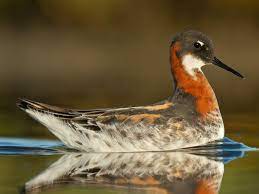
A group of birdwatchers recently made an exciting discovery at Kurichi Tank in Coimbatore as they spotted a Red-necked Phalarope (Phalaropus lobatus). These small shorebirds are known for their unique spinning behavior on water to stir up small invertebrates, primarily found in circumpolar regions between 60 and 70 degrees latitude. Red-necked Phalaropes inhabit coastal areas of the Arctic Ocean, extending south to the Aleutians and northwest to Britain. During winter, they mainly reside in oceanic regions, with sightings reported off central-west South America, the Arabian Sea, and central Indonesia to western Melanesia. Their distinctive behaviors and striking plumage make them a captivating sight for bird enthusiasts.
Facts/Terms for UPSC Prelims
- Circumpolar Distribution: Circumpolar distribution refers to the global range of a species around the North or South Pole, often inhabiting regions near the polar circles.
- Boreal Zone: The boreal zone is a geographical region characterized by coniferous forests and cold climates, typically found in the northern hemisphere.
- Polyandrous: Polyandrous behavior in animals, like the Red-necked Phalarope, involves females mating with multiple males and is relatively uncommon in the animal kingdom.
- IUCN: The International Union for Conservation of Nature (IUCN) is an organization that assesses and categorizes the conservation status of species worldwide, with “Least Concern” indicating a species is not currently facing significant threats of extinction.
- Plankton: Plankton refers to a diverse group of small organisms, including algae and tiny animals that float or drift in water. They often serve as a primary food source for various aquatic species.