
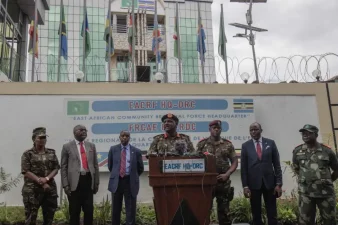
The anticipated meeting between the presidents of Rwanda and the Democratic Republic of Congo (DRC) has been cancelled. This meeting was intended to address the ongoing M23 rebel conflict in eastern Congo. This conflict has displaced over 1.9 million people. The event was scheduled to take place in Angola, where negotiations have been ongoing to ease tensions between the two nations. The cancellation raises concerns about the stability of the Great Lakes region.
Background of the M23 Conflict
The M23 insurgency began in 2021 and is rooted in ethnic tensions. The group predominantly represents Congolese Tutsis. Rwanda has been accused of supporting M23 through military means. This support has led to accusations of Rwanda fuelling instability in eastern Congo. The conflict has historical ties to the Rwandan Genocide and subsequent wars in the region.
Key Players Involved
The primary actors in this conflict include the governments of Rwanda and the DRC. The M23 rebels represent force within the conflict. The United Nations has also been involved, monitoring the situation and providing reports on troop movements. Regional and international stakeholders are critical in mediating peace talks.
Recent Developments
The meeting cancellation was attributed to disagreements over the terms of peace talks. Rwanda’s delegation insisted that direct talks between the DRC and M23 rebels were necessary. The DRC rejected this condition. This impasse reflects deeper issues in the relationship between the two nations. The DRC accused Rwanda of deploying troops to support M23, while Rwanda claims it is merely defending its borders.
International Response
The international community’s response has been muted. Experts suggest that more pressure is needed on Rwanda to de-escalate the conflict. The United States has been one of the few countries urging Rwanda to withdraw its support for M23. However, its influence is currently limited due to domestic transitions.
Implications for Regional Stability
The failure of the talks has implications for stability in the Great Lakes region. The potential for a broader conflict looms large. Historical precedents of violence in the region raise concerns about a repeat of the devastating wars between 1996 and 2003. The humanitarian crisis continues to worsen as displacement increases.
Future Prospects
The future of peace in the region remains uncertain. The DRC may need to engage directly with M23 to find a resolution. Meanwhile, Rwanda’s role in the conflict will likely remain contentious. The international community must reassess its strategies to effectively mediate and support peace efforts.
Questions for UPSC:
- Critically discuss the historical context of the M23 conflict in the Great Lakes region.
- Examine the role of external actors in mediating conflicts in Africa.
- Analyse the impact of the Rwandan Genocide on current regional dynamics.
- Estimate the humanitarian consequences of prolonged conflicts in the Democratic Republic of Congo.
Answer Hints:
1. Critically discuss the historical context of the M23 conflict in the Great Lakes region.
- The M23 conflict is rooted in ethnic tensions, particularly involving the Congolese Tutsis.
- It emerged from the aftermath of the Rwandan Genocide, which created deep-seated animosities.
- The conflict is linked to previous wars in the region (1996-2003) that caused millions of deaths.
- Historical grievances and territorial disputes continue to fuel the insurgency.
- The involvement of foreign nations complicates the historical narrative and exacerbates tensions.
2. Examine the role of external actors in mediating conflicts in Africa.
- External actors include the United Nations, regional organizations, and individual countries.
- They often provide peacekeeping forces, humanitarian aid, and diplomatic mediation.
- Influence can vary based on geopolitical interests and internal dynamics.
- International responses can be limited by domestic issues within influential countries.
- Successful mediation requires consensus among external actors, which is often difficult to achieve.
3. Analyse the impact of the Rwandan Genocide on current regional dynamics.
- The genocide has created a legacy of mistrust between ethnic groups in Rwanda and Congo.
- It has led to the formation of armed groups like M23, which claim to protect Tutsi interests.
- The trauma from the genocide influences political narratives and policies in both countries.
- Regional conflicts continue to echo the violence and instability initiated by the genocide.
- International perceptions of Rwanda’s role in the region are shaped by its historical actions during and after the genocide.
4. Estimate the humanitarian consequences of prolonged conflicts in the Democratic Republic of Congo.
- Over 1.9 million people have been displaced due to ongoing conflicts, leading to a humanitarian crisis.
- Access to basic services like healthcare, education, and clean water is severely compromised.
- Prolonged conflicts exacerbate poverty and food insecurity among affected populations.
- Children and vulnerable groups face increased risks of violence and exploitation.
- The international community’s response is often inadequate to meet the growing humanitarian needs.