Consumer forums in India are established to protect consumer rights. They provide a platform for resolving disputes between consumers and service providers. The framework is governed by the...
Tribunals are quasi-judicial bodies established to resolve disputes. They handle administrative and tax-related issues. Their purpose is to provide quicker and more specialized adjudication than traditional courts. Historical...
Public Interest Litigation (PIL) refers to legal actions initiated in a court of law for the protection of public interest. It allows individuals or groups to seek judicial...
Judicial activism refers to the proactive role of the judiciary in protecting citizens' rights. It encourages judges to interpret laws in a manner that promotes justice. This often...
Judicial review is the power of courts to assess the legality of actions taken by public bodies. It examines if decisions comply with constitutional provisions. This process focuses...
India's judicial system is structured hierarchically. It consists of various levels of courts, each with specific powers. The Supreme Court stands at the apex, followed by High Courts,...
High Courts are the highest courts in each state of India. Presently, there are 25 High Courts across the country. Some states share a High Court, such as...
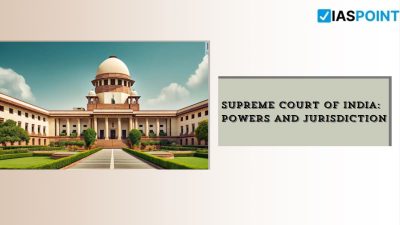
The Supreme Court of India is the highest judicial forum and final court of appeal under the Constitution of India. Established on January 28, 1950, it replaced the...
Emergency provisions in India allow the President to assume greater powers during crises. These provisions are designed to safeguard the country's sovereignty, unity, and integrity. They are outlined...
Inter-state relations refer to the interactions and relationships between the various states and union territories within the federal structure. These relationships encompass a range of areas including politics,...