
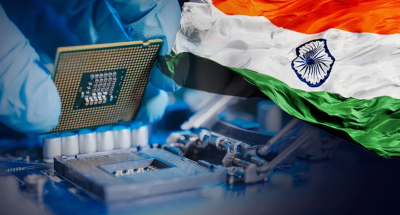
India’s semiconductor ambition cannot end with fabrication plants and packaging units. The deeper layer of technological sovereignty lies in semiconductor equipment manufacturing—the machines that deposit, etch, pattern, clean, inspect and handle wafers. Without domestic capability in these capital-intensive, knowledge-embedded systems, India will remain dependent on a handful of global suppliers for the most strategic segment of the value chain.
Recent geopolitical tensions, sanctions risks and pandemic-induced supply disruptions have demonstrated that access to equipment can determine whether fabs operate or stall. As India moves from aspiration to execution in semiconductors, the central question is no longer whether equipment matters, but what India can realistically build—and how it can build it with durability.
Why Equipment Defines Technological Sovereignty
Semiconductor equipment is not just hardware. It is where process knowledge is embedded, intellectual property accumulates and long-term competitive advantage is shaped. Unlike assembly or packaging, equipment manufacturing requires deep mastery of vacuum systems, plasma physics, precision motion control, materials science and advanced software integration.
India’s semiconductor programme now has visible domestic demand drivers:
- The Tata–PSMC fab at Dholera.
- Micron’s ATMP facility at Sanand.
- Proposed compound semiconductor lines for SiC and GaN.
- A growing chip design ecosystem under the Design Linked Incentive scheme.
For the first time, there is predictable, long-term demand for process tools, metrology systems and wafer-handling automation. This shift from isolated projects to sustained demand is critical for equipment industrialisation.
The Dual Engine: Semiconductors and Solar Manufacturing
India’s rapid expansion in solar photovoltaic (PV) manufacturing strengthens the case for indigenous equipment. Many manufacturing steps in PV and semiconductor fabrication overlap—crystal growth, wafer processing, PECVD deposition, plasma cleaning, metrology and automated handling.
India has already demonstrated cost-competitive capability in several PV tool subsystems. The convergence of semiconductor and solar manufacturing creates a sufficiently large combined market to justify domestic R&D and industrial scaling. This dual demand reduces commercial risk for early-stage equipment developers.
What India Can Realistically Build First
Attempting to replicate global giants overnight would be counterproductive. A phased approach rooted in engineering realism is essential.
India’s precision-engineering ecosystem already shows capability in:
- PECVD and etch systems.
- Diffusion furnaces for PV and power devices.
- Plasma-cleaning and wafer-cleaning modules.
- Inspection and metrology systems.
These tools demand high reliability, stable plasma control, precise gas-flow management and temperature uniformity over long operating cycles. Institutions such as Society for Applied Microwave Electronics Engineering and Research (SAMEER), Solid State Physics Laboratory (SSPL), Raja Ramanna Centre for Advanced Technology (RRCAT) and Central Manufacturing Technology Institute (CMTI) possess advanced R&D strengths in these domains.
The gap is not scientific knowledge, but industrial translation. Converting laboratory prototypes into production-grade tools with global reliability benchmarks requires committed private-sector ownership.
Building the Machine-Making Ecosystem
Semiconductor equipment rarely emerges from a single firm. It is the outcome of tightly integrated ecosystems involving:
- Precision machining and fabrication.
- Robotics and motion-control integration.
- Vacuum and gas delivery specialists.
- Control software and embedded systems.
- Reliability engineering and field service networks.
A National Semiconductor Equipment Mission could coordinate this ecosystem by:
- Co-funding pilot manufacturing lines.
- Establishing shared SEMI/GEM-compliant testing and reliability facilities.
- Encouraging common subsystem platforms to reduce cost and accelerate iteration.
- Securing pilot validation slots at domestic fabs and PV giga-factories.
Such coordination would reduce duplication and enable scale learning.
The Strategic Case for Wide-Bandgap Equipment
Wide-bandgap semiconductors such as silicon carbide (SiC) and gallium nitride (GaN) represent an emerging opportunity. These technologies remain technologically fluid, offering space for new entrants.
India holds an unusual advantage: decades of defence-driven expertise in high-vacuum systems, plasma physics, microwave engineering and beam diagnostics. With industrial partnerships, this knowledge can be translated into deployable tools for compound semiconductor manufacturing—mirroring how defence R&D seeded civilian semiconductor ecosystems in other countries.
Targeting wide-bandgap equipment could allow India to enter a high-growth segment without directly competing in the most mature, capital-intensive tool categories.
Industry Ownership: The Decisive Variable
The government has already laid groundwork through incentives, the India Semiconductor Mission, and demand-side anchors. The next phase requires industrial leadership.
For engineering conglomerates and automation firms, semiconductor equipment is not merely an import-substitution opportunity. It offers entry into one of the world’s most demanding engineering industries—where reliability, precision and long-term customer trust define success.
Disciplined field iteration, transparent reliability metrics and global standards compliance must guide this effort. Equipment credibility is earned over years, not quarters.
Looking Beyond Domestic Demand
India’s opportunity is not limited to its own fabs. Across Southeast Asia, Africa and the Middle East, new electronics, PV and power-semiconductor capacities are emerging. Many of these markets face high equipment costs and long delivery cycles from traditional suppliers.
Once validated domestically, Indian-built tools could serve these markets credibly—positioning India as a trusted equipment partner for the Global South. Trade frameworks and expanding capital-goods capabilities strengthen this export potential.
What to Note for Prelims?
- Difference between semiconductor fabrication, ATMP and equipment manufacturing.
- Overlap between PV and semiconductor manufacturing processes.
- Role of PECVD, etch systems and diffusion furnaces.
- Wide-bandgap semiconductors: SiC and GaN.
- Functions of SAMEER, SSPL, RRCAT and CMTI.
What to Note for Mains?
- “Technological sovereignty requires control over capital goods.” Discuss in the context of semiconductor equipment.
- Analyse the role of equipment manufacturing in strengthening India’s semiconductor ecosystem.
- Evaluate the feasibility of a National Semiconductor Equipment Mission.
- Discuss how defence R&D can catalyse civilian high-technology industries.
- Examine export opportunities for Indian semiconductor capital goods in the Global South.