
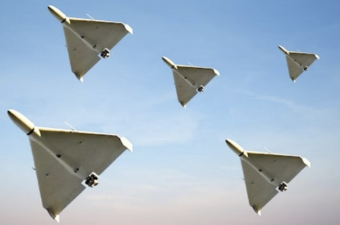
India is developing the Sheshnaag-150, a long-range swarming attack drone designed to strengthen its indigenous unmanned warfare capability. The system is being built by Bengaluru-based defence startup Newspace Research Technologies and has already completed its maiden flight. The platform is being tested as part of a wider shift towards cheaper, more flexible, and more autonomous battlefield systems.
What is Sheshnaag-150?
Sheshnaag-150 is a coordinated swarm-attack drone system. It is designed to operate in groups and overwhelm enemy air defences before striking selected targets. The drone has an operational range of over 1,000 km and can stay airborne for more than five hours. It can carry warheads weighing between 25 kg and 40 kg.
Key Operational Features
- The drone is built for long-range precision strike missions.
- It can loiter over target areas and wait for the right moment to attack.
- The system is designed for a high degree of automation.
- It can identify, track, and engage targets with minimal human supervision.
- Its swarm design allows multiple drones to coordinate during a mission.
Why the Programme Gained Urgency
The programme received greater attention after Operation Sindoor, when the Indian military reportedly sought faster progress on indigenous long-range strike drones. The aim is to reduce dependence on imported systems and build a mature domestic capability for future conflicts. The development reflects a broader global trend in which low-cost drones are increasingly used for strategic battlefield effects.
Technology and Navigation Approach
A major element of the system is its proprietary control software, described as the core mother code. This software supports Sheshnaag-150 and other related platforms built on the same architecture. The drone is expected to use visual navigation in future, which would help it operate even when satellite signals are jammed or unavailable. This is important in modern warfare, where electronic warfare and GPS denial are growing threats.
Last Modified: April 28, 2026