
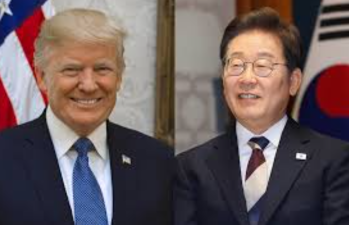
The upcoming summit between South Korean President Lee Jae Myung and former US President Donald Trump in Washington is attracting attention. Beyond the recently settled tariff dispute, several critical issues will be discussed. These include cost-sharing for US troops in South Korea, the evolving role of American forces on the peninsula, and the transfer of wartime operational control of the ROK-US Combined Forces Command. The meeting is viewed as a very important moment for the bilateral alliance amid complex geopolitical and domestic challenges.
Context of the Summit
The summit occurs in a period marked by the US “America First” policy, which prioritises American interests over alliances. South Korea faces a challenging negotiation environment with limited leverage. Summit meetings typically serve as symbolic affirmations of friendship rather than venues for intense bargaining. Most substantive negotiations happen behind closed doors beforehand. Thus, expectations should be managed realistically.
Key Issues on the Agenda
Cost-sharing for US troops remains a sensitive topic. South Korea hosts approximately 28,500 American soldiers, and Washington seeks increased financial contributions. Another major issue is the transfer of wartime operational control from the US to South Korea. This transfer is controversial because it could signal a reduced US military commitment during conflict, raising strategic concerns. The role of US forces may also shift in response to regional security dynamics.
Strategic Diplomacy and Alliance Management
President Lee’s recent summit with Japanese Prime Minister Shigeru Ishiba before travelling to Washington signals a coordinated approach with key US allies. Demonstrating unity with Japan may strengthen South Korea’s position. In Washington, Lee is expected to reassure Trump of South Korea’s commitment to liberal democracy and the Free World. This is important to counter perceptions of ideological shifts within South Korea’s Democratic Party perceived by some US policymakers as sympathetic to socialist states.
Economic and Security Cooperation
Beyond military matters, economic ties will be brought into light. South Korea contributes to the US economy through investments in automobile and semiconductor manufacturing. Future cooperation in advanced technologies such as shipbuilding, semiconductors, and electric vehicle batteries may be explored. Security concerns, particularly the threat of North Korean nuclear attacks, will be emphasised. Securing a firm US nuclear umbrella guarantee remains a priority for Seoul.
Managing Expectations and Future Prospects
The summit’s immediate outcomes may be limited. The focus should be on building mutual trust and goodwill. President Lee’s ability to forge a strong personal rapport with Trump could pave the way for deeper cooperation later. The alliance’s long-term stability depends on continuous dialogue and shared strategic interests rather than quick fixes. Both sides will likely pursue incremental progress on complex issues over time.
Questions for UPSC:
- Point out the strategic importance of the Korea-US alliance in maintaining peace and stability in East Asia.
- Critically analyse the implications of the “America First” policy on US alliances, with suitable examples from recent international relations.
- Estimate the economic benefits and challenges of foreign direct investment in host countries, using South Korea’s investments in the US as a case study.
- What is the significance of wartime operational control in military alliances? How does it affect sovereignty and strategic autonomy of allied nations?