
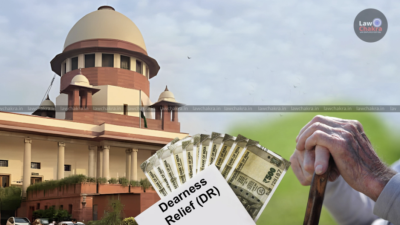
The Supreme Court of India ruled that employees and pensioners are entitled to equal Dearness Allowance (DA) and Dearness Relief (DR). The judgement was delivered in a case involving central government employees and pensioners. It mandates uniformity in the calculation and payment of DA and DR across both groups.
Supreme Court Verdict Details
The apex court directed that DA and DR should be granted at the same rate to both serving employees and pensioners. The judgement covers central government employees and pensioners under the same pay scales. The court specified that pensioners should not receive lower DA or DR compared to employees.
Dearness Allowance and Dearness Relief
DA is a cost of living adjustment allowance paid to government employees to offset inflation. DR is the equivalent allowance paid to pensioners to adjust for inflation after retirement. Both are calculated as a percentage of the basic salary or pension. The Supreme Court’s order ensures parity in these inflation adjustments.
Impact on Pensioners and Employees
The ruling affects millions of central government pensioners and employees across India. It requires the government to revise pensioners’ DR payments to match the DA rates given to employees. This decision may lead to increased pension disbursements and uniform benefits.
Implementation and Government Response
The government must comply with the Supreme Court order in future DA and DR releases. The order applies to all past and future payments where disparity existed. The Department of Expenditure is responsible for implementing the revised payment structure.
What to Study for UPSC Exams?
- Supreme Court Judgements
- Public Service Benefits
- Inflation Adjustment Mechanisms
- Pension Policies in India
Supreme Court Judgements
The Supreme Court of India was established in 1950 under the Constitution. It has original, appellate, and advisory jurisdiction. Landmark judgements like Kesavananda Bharati (1973) established the basic structure doctrine. The court can strike down laws violating fundamental rights and acts as the final interpreter of the Constitution.
Public Service Benefits
Public service benefits include pension schemes, health insurance, and leave allowances for government employees. The Central Civil Services (Pension) Rules govern pensions. Benefits vary by service cadre and impact employee retention. Some benefits, like Dearness Allowance, adjust periodically to inflation.
Inflation Adjustment Mechanisms
Inflation adjustments like Dearness Allowance (DA) compensate for rising living costs. DA is revised quarterly based on the Consumer Price Index. Other mechanisms include cost of living adjustments (COLA) in pensions and wages, ensuring purchasing power remains stable despite inflation.
Pension Policies in India
India shifted from defined benefit to defined contribution with the National Pension System (NPS) in 2004. The Employees’ Pension Scheme (EPS) provides monthly pensions to government and private sector workers. Pension policies vary by sector, with reforms aimed at fiscal sustainability and wider coverage.
Last Modified: April 11, 2026