
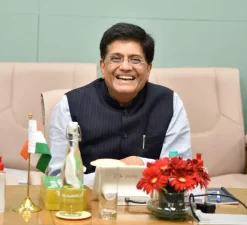
The call for a robust regulatory framework for Artificial Intelligence (AI) has gained prominence. Union Minister Shri Piyush Goyal emphasised this during the inaugural ceremony of the Vidhi Pragati – National IP Moot Court Competition, 2025. The event, taking place from 7th to 9th February 2025, focuses on the intersection of AI and copyright law. With a prize pool of Rs 3.25 lakh, it aims to enhance advocacy skills among law students while addressing contemporary legal issues.
Significance of AI in Copyright
AI technologies are reshaping the creative industries. As AI-generated content becomes commonplace, questions about authorship and originality arise. Copyright laws need to evolve to protect genuine creators without stifling innovation. The competition encourages participants to explore these challenges.
Government Initiatives for Innovation
The Union Budget 2025 has introduced several initiatives to boost innovation. The announcement of 50,000 Atal Tinkering Labs (ATLs) aims to encourage creativity among students. Additionally, Rs 20,000 crore has been allocated to the Anusandhan National Research Foundation (ANRF) Fund. These measures support the development of new ideas and technologies.
IPR Education in Law Colleges
Shri Goyal proposed making Intellectual Property Rights (IPR) a mandatory subject in law colleges. About IPR is crucial in ’s digital landscape. It equips future lawyers with the knowledge to navigate the complexities of AI and copyright law.
AI for Education Fund
The government has established an AI for Education fund of Rs 500 crore. This fund aims to promote collaboration among academia, government, and the private sector. It seeks to enhance educational outcomes through innovative uses of AI technology.
Engagement with Experts
The government plans to consult experts and young minds for suggestions on regulatory changes. This engagement is essential for adapting laws to modern technological advancements. It aims to strike a balance between encouraging innovation and protecting creators’ rights.
Competition Format and Objectives
The moot court competition format is designed to refine students’ legal acumen. Participants will engage with pressing issues in IPR law. The competition not only encourages critical thinking but also prepares students to become leaders in the legal field.
Anticipated Participation
The competition is expected to attract 26 teams from law schools across India. This diverse participation will create a vibrant environment for scholarly discourse. It provides a platform for students to showcase their skills and knowledge.
Future of AI and Copyright
The relationship between AI and copyright is evolving. Ethical use of AI can enhance creativity and innovation. However, misuse can lead to violations of copyright protection. The ongoing discourse will shape the future of copyright laws in the age of AI.
Challenges and Opportunities
Participants in the moot court will critically analyse the challenges posed by AI. They will also explore the opportunities it presents for copyright law. This engagement is vital for developing effective legal frameworks.
Questions for UPSC:
- Critically analyse the implications of AI on copyright law in the digital age.
- Estimate the potential impacts of mandatory IPR education in law colleges on legal practice.
- Point out the key government initiatives aimed at encouraging innovation in India.
- With suitable examples, discuss the role of AI in enhancing or disrupting creativity in the arts.
Answer Hints:
1. Critically analyse the implications of AI on copyright law in the digital age.
- AI-generated content raises questions of authorship and originality, challenging traditional copyright definitions.
- Existing copyright laws may not adequately protect the rights of human creators against AI-generated works.
- There is a potential for increased infringement cases as AI tools replicate or remix existing works.
- Legal frameworks must evolve to address the balance between innovation and protection of intellectual property.
- Ethical considerations in AI usage can influence how copyright is enforced and interpreted in the future.
2. Estimate the potential impacts of mandatory IPR education in law colleges on legal practice.
- Mandatory IPR education will equip future lawyers with essential knowledge in a rapidly evolving field.
- It may lead to a more informed legal practice, reducing litigation related to intellectual property disputes.
- Students will be better prepared to advise clients on compliance with copyright and patent laws.
- Increased focus on IPR can encourage innovation and entrepreneurship among law graduates.
- It can enhance interdisciplinary collaboration, bridging gaps between law and technology sectors.
3. Point out the key government initiatives aimed at encouraging innovation in India.
- Establishment of 50,000 Atal Tinkering Labs (ATLs) to promote creativity and hands-on learning among students.
- Allocation of Rs 20,000 crore to the Anusandhan National Research Foundation (ANRF) Fund for research and innovation.
- Introduction of a Rs 10,000 crore Fund of Funds to support startups and entrepreneurs.
- Creation of an AI for Education fund of Rs 500 crore to enhance educational outcomes through innovative technology.
- Engagement with experts and young minds for regulatory suggestions to adapt to technological advancements.
4. With suitable examples, discuss the role of AI in enhancing or disrupting creativity in the arts.
- AI tools like DALL-E and ChatGPT can generate unique artworks and stories, enhancing creative possibilities.
- AI can assist artists in exploring new styles and techniques, broadening their creative horizons.
- However, AI-generated content may threaten traditional authorship, raising concerns over originality and credit.
- Examples include AI-generated music compositions that challenge the role of human musicians in the creative process.
- Conversely, AI can disrupt established norms, leading to debates on copyright and the definition of creativity.