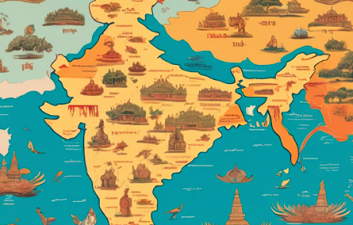
Federalism is a system of governance. It divides power between central and regional authorities. This structure allows for local autonomy. It can enhance representation and accountability. In India, federalism is enshrined in the Constitution. It accommodates diverse cultures and languages. The distribution of powers is crucial for unity. Federalism can also lead to conflicts over jurisdiction. Balancing interests is essential for stability.
The Women’s Reservation Bill proposes increasing Lok Sabha seats from 543 to 850 by reserving one-third of seats for women. The bill aims to enhance women’s representation in...
Regionalism is the strong identification with and loyalty to a specific region. It often involves demands for regional autonomy or a distinct identity. This phenomenon can manifest in...
In October 2024, a nine-judge Constitution Bench of the Supreme Court of India is set to deliver a judgement regarding the contentious issue of industrial alcohol regulation. This...
The Constitution of India incorporates several features from other countries' constitutions. Notable borrowed elements include: Government of India Act, 1935: Federal scheme, emergency provisions, and the office of...
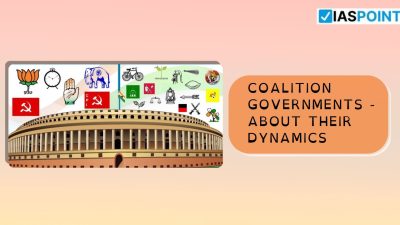
A coalition government is formed when multiple political parties collaborate to govern. This typically occurs when no single party secures a majority in elections. The term "coalition" originates...
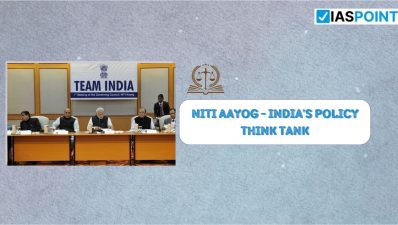
NITI Aayog, or the National Institution for Transforming India, was established on January 1, 2015. It replaced the Planning Commission and serves as the policy think tank of...
Goods and Services Tax (GST) was introduced via the 101st Constitution Amendment Act in 2016. GST aims to unify the country's tax structure under the slogan "One Nation,...
Inter-state relations refer to the interactions and relationships between the various states and union territories within the federal structure. These relationships encompass a range of areas including politics,...
Centre-State relations are fundamental to India's federal structure. They define the interaction between the central government and state governments. The Constitution of India outlines these relations in three...
Federalism is a governance structure where power is shared between a central authority and regional governments. It aims to balance independence and cooperation among different levels of government....