Government refers to the system or group of people governing an organised community. It can be local, regional, or national. Governments create and enforce laws. They manage public resources and services. In India, the government operates under a parliamentary system. It balances power among various branches. Additionally, it plays a crucial role in shaping culture and economic policies.
Recent government measures aim to prevent damage to underground utilities during telecom infrastructure development. Union Communications Minister Jyotiraditya Scindia informed Parliament about new rules and digital tools enhancing...
Recent reports show the ongoing challenges faced by Indian cities in managing finances and governance. Despite cities generating a major share of government revenue and GDP, urban local...
The Andhra Pradesh government introduced a draft Population Management Policy in 2026. It aims to encourage families to have two or three children. The policy also focuses on...
The Members of Parliament Local Area Development Scheme (MPLADS) introduced the eSAKSHI web portal on 1 April 2023. This portal modernises the fund-flow process for MPLADS. It allows...
Recent reforms in government banking have introduced two key initiatives to improve transparency and efficiency. Launched by the Controller General of Accounts (CGA), Ms T.C.A. Kalyani, these tools...
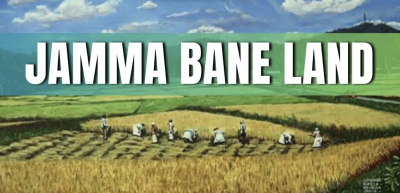
Karnataka has amended its land revenue law to modernise land records for Jamma Bane holdings in Kodagu district, the heartland of the Kodava community. The change seeks to...
India faces important moment in 2025. With 65% of its population under 35 years, the country must harness its youth for economic and democratic growth. Yet, growth is...
The Indian Government passed the Promotion and Regulation of Online Gaming Bill 2025 at the end of the monsoon session. The law bans online real money games but...
The Animal Birth Control (ABC) Rules, 2023, aim to control stray dog populations and eradicate rabies through sterilisation and vaccination. Recent developments show the need for a coordinated...
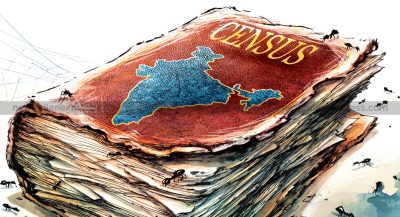
The census is a systematic process of collecting, analysing, and interpreting demographic data. In India, its history dates back to the early 19th century. The census has evolved...