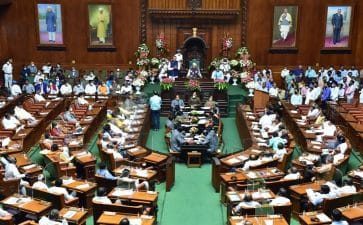
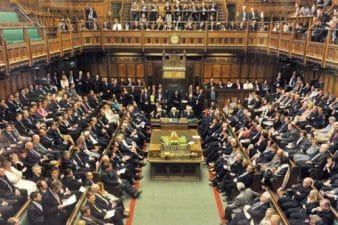
The Legislative Council is a key component of the parliamentary system in some Indian states. It serves as the upper house of the legislature. Members are elected and appointed. The council reviews legislation passed by the lower house. It plays a crucial role in representing various interests. The council also contributes to the law-making process. Its functions enhance democratic governance.
The Election Commission as an autonomous, quasi-judicial and a constitutional body, was established for purposes of fair and free elections on January 25, 1950, under Article 324 of...
The Finance Commission constituted under Article 243I shall also review the financial position of the Municipalities and make recommendations of the Governor as to : (a) principles which...
Panchayati Raj Institutions Part IX, with Articles 243 to 243O, deals with institutions of Panchayati Raj. Article 243 defines Panchayats to include Gram Sabha, Gram Panchayat, Panchayat samiti...
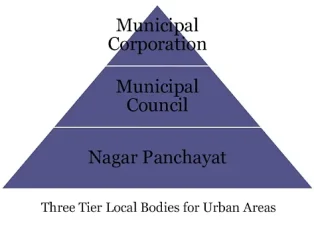
The 74th amendment (1993) has changed the whole local urban administration, giving a new structure and a new orientation to its organization, functions and finances. The amendment has...
'The Council of Ministers functions on the principles of parliamentary features which are summed up as under: (a) Ministers have to be members of the parliament to be...
In each State of India, there is a provision for a legislature (Article 168). It consists of the Governor and a legislative assembly and legislative council if the...
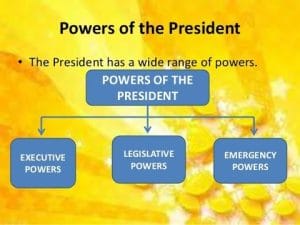
Some of the major legislative and financial powers and functions of the President can be stated as: "The President summons or prorogues the Houses of Parliament and can...
A careful reading of the Constitution of India as also of its polity reveals that the spirit of our polity is not federal, but is, in fact, unitary....
Being the most lengthy constitution, the Constitution of India has provisions of all sorts'important, less important and even unimportant; significant; transitional and even provisional; broader, larger and even...