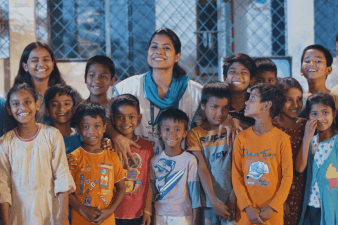
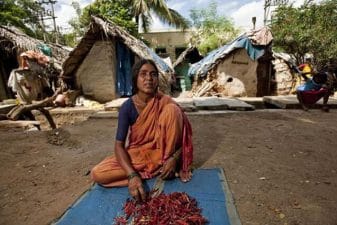
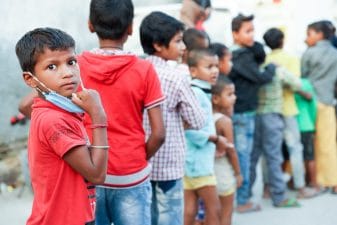
The National Policy for Children aims to ensure the rights and well-being of children in India. It focuses on health, education, and protection. The policy recognises children as valuable assets for the nation. It promotes their holistic development. The government seeks to create a supportive environment. This includes addressing issues like poverty and discrimination. The policy is a commitment to future generations.
The Government of India has adopted a new National Policy for Children, 2013 on April 26th, 2013. The policy recognizes every person below the age of eighteen years...
The BJP led National Democratic Alliance (NDA) is initiating the task of the examining the pre-2014 government policies with a view to shape, reshape and innovate the policies....
The National Policy on Education (NPE) aims at promoting education amongst the people. The policy covers elementary education in both rural and urban India. The first NEP was...
Women, in India, constitute about 50 crores of our population. And yet their social and economic status is far from being any measure of satisfaction. In fact, they...
Nineteen percent of the world's children live in India, constituting 42 percent of India's total population. "The Ministry of Women and Child Development published a report on Child...
General Part IV of the Constitution of India deals with Articles 36 to 51. "These articles relate to the directive principles. Article 36 gives the meaning of the...
The International Organization for Migration (IOM) and the François-Xavier Bagnoud Center for Health and Human Rights at Harvard University have joined forces to produce a comprehensive report titled...
International Childhood Cancer Day (ICCD) is observed on February 15 every year. This day is dedicated to creating awareness about childhood cancer and supporting the children affected by...
The Animation, Visual Effects, Gaming and Comics (AVGC) Promotion Task Force recently presented a report to the Indian government, proposing the creation of a national AVGC-Extended Reality Mission....
This Programme is being implemented for prevention 'nd control of vector-borne diseases such as malaria, filariasis, kala-azar, Japanese encephalitis, dengue, and chikungunya. The government has taken various steps...