
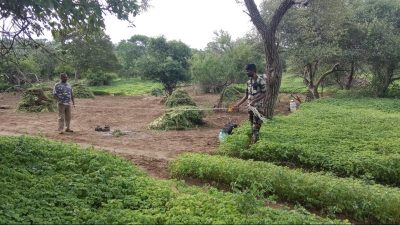
Recent developments in the Mudumalai Tiger Reserve highlight an emerging ecological challenge. The invasive plant species Senna tora has been identified in the buffer zones of the reserve. This species, native to Central America, poses a potential threat to local wildlife. Elephants, deer, and Indian gaur rely on the region’s grasslands for sustenance. The Forest Department is taking proactive measures to combat this issue.
About Senna Tora
Senna tora is a plant that has been appearing in the Mudumalai Tiger Reserve over the past few years. Local elders suggest that its presence may have been observed for much longer. The plant thrives in drier areas, which raises concerns about its impact on the grasslands. These grasslands are crucial for the survival of various herbivores in the reserve.
Current Ecological Concerns
The emergence of Senna tora is not an isolated issue. The reserve already faces challenges from other invasive species, such as Senna spectabilis and Lantana camara. The Forest Department fears that if Senna tora spreads unchecked, it could disrupt the delicate balance of the existing ecosystem. This could lead to competition for resources among native species.
Management Strategies
In response to this threat, the Forest Department has initiated removal experiments in a 15-hectare area. They are employing both manual and mechanised methods for plant removal. While manual labour poses difficulties, mechanised equipment has shown positive results. The goal is to prevent Senna tora from establishing itself as an invasive species.
Monitoring and Future Actions
The exact distribution of Senna tora within the reserve remains unclear. The Forest Department acknowledges the need for comprehensive mapping of the plant’s presence. Continuous monitoring will be essential to assess its impact on local flora and fauna.
Community Involvement
Engagement with local communities has been beneficial. Elders provide vital information about the plant’s historical presence. This collaboration can aid in developing effective management strategies. Local knowledge is invaluable in understanding ecological changes over time.
Conclusion
The situation in Mudumalai Tiger Reserve serves as a reminder of the complexities of ecosystem management. Proactive measures and community involvement are crucial in addressing the challenges posed by invasive species.
Questions for UPSC:
- Critically analyse the ecological impact of invasive species on native flora and fauna.
- What are the characteristics of Senna tora? Explain its potential threat to the Mudumalai Tiger Reserve.
- What is the role of community involvement in ecological conservation? Provide suitable examples.
- Explain the methods used for controlling invasive plant species. How effective are these methods in various ecosystems?
Answer Hints:
1. Critically analyse the ecological impact of invasive species on native flora and fauna.
- Invasive species can outcompete native species for resources, leading to declines in native populations.
- They often disrupt food webs, affecting predator-prey relationships and overall biodiversity.
- Invasive plants can alter habitat structures, changing soil chemistry and nutrient cycling.
- They may introduce diseases that native species are not equipped to handle.
- Long-term ecological balance can be threatened, leading to ecosystem degradation and loss of resilience.
2. What are the characteristics of Senna tora? Explain its potential threat to the Mudumalai Tiger Reserve.
- Senna tora is a drought-resistant plant that thrives in drier areas, particularly grasslands.
- It has a cyclical growth pattern, emerging after the southwest monsoon and withering by year-end.
- The plant can dominate landscapes, potentially outcompeting native grasses that support local herbivores.
- Its spread may threaten the ecological balance, impacting food sources for elephants, deer, and Indian gaur.
- Currently, its threat level is limited, but unchecked growth could lead to important ecological disruption.
3. What is the role of community involvement in ecological conservation? Provide suitable examples.
- Community involvement encourages local stewardship and awareness about ecological issues.
- Local knowledge enhances understanding of historical ecological changes and species behavior.
- Engagement can lead to collaborative management strategies that are culturally relevant and effective.
- Examples include local elders providing insights about invasive plant histories, which guide conservation efforts.
- Community-led initiatives can increase resource monitoring and protection efforts, enhancing biodiversity conservation.
4. Explain the methods used for controlling invasive plant species. How effective are these methods in various ecosystems?
- Manual removal involves physically uprooting plants but can be labor-intensive and less effective for large infestations.
- Mechanised removal uses machinery, which can be more efficient and effective in large areas.
- Chemical herbicides can control invasive species but may have unintended effects on native flora and fauna.
- Biological control employs natural predators or pathogens, but success varies based on ecosystem dynamics.
- Integrated management strategies that combine multiple methods tend to be more effective across diverse ecosystems.