
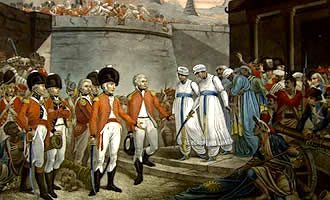

The Drain of Wealth Theory is an economic concept that articulates how British colonial rule systematically extracted wealth from India. This theory was primarily developed by Dadabhai Naoroji in the late 19th century. It brought into light the negative impact of British policies on India’s economy, leading to widespread poverty and underdevelopment.
Historical Context
India was historically one of the wealthiest nations. Ancient historians, such as Strabo, noted its riches. The arrival of foreign powers, including Alexander and later the Mughals, was driven by this wealth. However, by the late 18th century, British colonialism transformed India into a land of poverty and famine.
Dadabhai Naoroji – The Pioneer
Dadabhai Naoroji, born on 4 September 1825 in Gujarat, was a key figure in articulating the Drain of Wealth Theory. After serving in various administrative roles, he became the first Indian professor at Elphinstone College, Bombay. He founded the East India Association in London in 1867, which aimed to address Indian grievances.
The Concept of Drain of Wealth
Naoroji first presented the concept of the drain in his paper England’s Debt to India at the East India Association meeting in 1867. He argued that India was being economically exploited. The British were extracting resources while providing little in return, leading to loss of wealth.
Economic Mechanisms of Drain
The Drain of Wealth occurred through various mechanisms:
- Export of Raw Materials: India exported raw materials at low prices while importing finished goods at inflated costs.
- High Taxation: The British imposed heavy taxes on Indian peasants, which were largely remitted to Britain.
- Salaries and Pensions: High salaries of British officials were sent back to Britain, draining Indian resources.
- Home Charges: Payments made from Indian revenues to British entities for administrative and military expenses.
Early Critics and Supporters
Before Naoroji, several Indian intellectuals began critiquing British economic policies. Raja Ram Mohun Roy was one of the first to highlight the issue of Indian tributes to England. Others, like Bhaskar Tarakadkar, Bhau Mahajan, and Rama Krishna Viswanath, also raised concerns about economic exploitation.
Naoroji’s Economic Analysis
Naoroji’s analysis included the direct loss of wealth and the physical transfer of resources to Britain. He argued that this drain severely limited India’s economic growth and capital accumulation. His emphasis on equitable financial relations was revolutionary.
Impact on Indian Nationalism
The Drain of Wealth Theory became a mainstay of Indian nationalism. It mobilised public opinion against British rule and provided an economic rationale for self-rule. Naoroji’s ideas inspired later nationalists, including M.G. Ranade and R.C. Dutt, who also critiqued British policies.
The Role of the Indian National Congress
The Indian National Congress, founded in 1885, adopted the Drain of Wealth Theory in its agenda. In 1896, it formally blamed the drain for India’s famines and economic hardships. This helped consolidate nationalist sentiments across diverse sections of society.
British Responses to the Theory
Initially, some British officials acknowledged the drain. However, as nationalist sentiments grew, they began to deny its existence. They argued that India benefited from British investments in infrastructure. This narrative was challenged by Naoroji and other nationalists.
Economic Consequences of the Drain
The Drain of Wealth resulted in severe economic consequences for India:
- Poverty and Famine: The outflow of wealth led to widespread poverty and recurring famines.
- Industrial Decline: British imports decimated traditional Indian industries, particularly textiles.
- Stagnation: Lack of investment in public services and infrastructure hindered economic development.
Tax Burden on Indians
The British imposed a disproportionate tax burden on India. Naoroji calculated that India’s tax burden in 1886 was higher than that of Britain. This exacerbated economic disparities and led to increased hardship for the Indian populace.
Nationalist Mobilisation
The Drain of Wealth Theory was instrumental in mobilising the Indian populace against British rule. It provided a clear economic rationale for the independence movement. Nationalist leaders used the theory to rally support and articulate demands for self-governance.
Naoroji’s Legacy
Naoroji’s work laid the groundwork for future economic critiques of colonialism. His emphasis on the economic exploitation of India influenced subsequent generations of nationalists and economists. His ideas remain relevant in discussions about colonialism and economic justice.
Broader Implications of the Drain Theory
The Drain of Wealth Theory brought into light broader themes of exploitation in colonial contexts. It illustrated how colonial powers extract resources at the expense of local economies. This concept has influenced post-colonial studies and economic discussions globally.
References to Other Economic Theories
The Drain of Wealth Theory aligns with various economic theories that critique imperialism. Thinkers like Adam Smith and Karl Marx also addressed issues of exploitation and economic disparity. Their critiques provide additional context to Naoroji’s arguments.


