
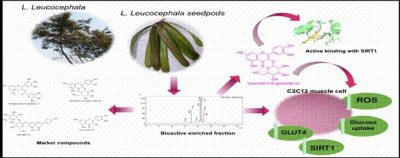
Recent research marks the medicinal capabilities of Subabul, a traditional plant. Specifically, the seedpods of Leucaena leucocephala show promise in addressing insulin resistance linked to type II diabetes. The study, conducted by a team at the Institute of Advanced Study in Science and Technology, Guwahati, reveals findings regarding the plant’s bioactive components.
Overview of Subabul
Subabul is a fast-growing leguminous tree native to tropical and subtropical areas. Its leaves and immature seeds are commonly consumed as food. They are rich in protein and fibre. This traditional use puts stress on its significance in various ethnic cuisines.
Research Focus
The research team aimed to explore the therapeutic potential of Subabul’s seedpods. They developed a bioactivity-guided fractionation method. This process helped isolate four active compounds after thorough screening for their biological activity.
Key Findings
The bioactive fraction demonstrated enhanced insulin sensitisation in skeletal muscle cells. This was particularly evident in free fatty acid-induced C2C12 cells. The isolated compound quercetin-3-glucoside was crucial in this process. It upregulated Sirtuin 1 (SIRT1), a mitochondrial deacetylase enzyme that plays a role in insulin sensitivity.
Molecular Interactions
Molecular docking studies revealed stable interactions between quercetin-3-glucoside and SIRT1. These interactions involved hydrogen bond formation, indicating a strong affinity. This relationship suggests that quercetin-3-glucoside could effectively enhance glucose uptake.
Ethnobotanical Significance
The study supports ethnobotanical claims regarding Subabul’s use in managing diabetes. Its traditional applications align with modern scientific findings. This connection puts stress on the importance of integrating traditional knowledge with contemporary research.
Future Implications
The research opens avenues for developing new therapeutic agents derived from Subabul. Further studies could explore its potential in broader diabetes management strategies. This could lead to innovative treatments that leverage natural compounds for health benefits.
Questions for UPSC:
- Analyse the role of traditional medicinal plants in modern healthcare systems.
- Estimate the impact of insulin resistance on global health and its management strategies.
- Critically discuss the significance of bioactive compounds in treating metabolic disorders.
- Examine the relationship between traditional dietary practices and contemporary nutritional science.
Answer Hints:
1. Analyse the role of traditional medicinal plants in modern healthcare systems.
- Traditional medicinal plants provide a rich source of bioactive compounds used in modern pharmaceuticals.
- They are often more accessible and affordable, especially in rural areas, promoting health equity.
- Integration of traditional knowledge can lead to innovative treatments and approaches in healthcare.
- Research on these plants can validate their efficacy and safety, bridging the gap between traditional and modern medicine.
- They contribute to biodiversity conservation and sustainable healthcare practices by utilizing local resources.
2. Estimate the impact of insulin resistance on global health and its management strategies.
- Insulin resistance is a key factor in the rising prevalence of type II diabetes, affecting millions worldwide.
- It contributes to increased healthcare costs and economic burdens due to associated complications.
- Management strategies include lifestyle modifications, dietary changes, and pharmacological interventions.
- Public health initiatives focusing on education and prevention can mitigate the impact of insulin resistance.
- Research into natural compounds, like those from Subabul, offers potential new avenues for treatment.
3. Critically discuss the significance of bioactive compounds in treating metabolic disorders.
- Bioactive compounds can modulate metabolic pathways, improving insulin sensitivity and glucose metabolism.
- They often have fewer side effects compared to synthetic drugs, making them safer alternatives.
- Research into these compounds enhances our understanding of disease mechanisms and therapeutic targets.
- They can be sourced from various plants, promoting biodiversity and sustainable practices in healthcare.
- Bioactive compounds can also work synergistically, enhancing overall therapeutic efficacy.
4. Examine the relationship between traditional dietary practices and contemporary nutritional science.
- Traditional diets often emphasize whole foods, which align with contemporary nutritional recommendations.
- They can provide vital information about nutrient-dense foods that promote health and prevent diseases.
- Traditional knowledge can guide modern dietary guidelines, especially in culturally diverse populations.
- Research on traditional practices can validate their health benefits and inform public health policies.
- There is a growing recognition of the importance of cultural context in dietary choices and nutrition science.