
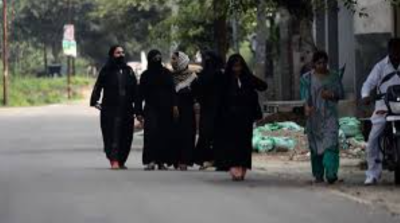
The Uttar Pradesh government has announced a comprehensive policy shift to extend the benefits of core central and state-sponsored welfare schemes to women affected by triple talaq and acid attacks, alongside destitute women. Chief Minister Yogi Adityanath directed the State Women Welfare Department to act as the nodal agency to compile verified, district-wise databases of these individuals. This targeted social intervention aims to bypass historical procedural barriers and provide priority access to secure housing and formal health insurance, moving the rehabilitation strategy beyond legal protections into concrete economic and physical security.
Core Welfare Schemes Included in the Package
The initiative integrates existing flagship housing and healthcare programs to establish a safety net for targeted vulnerable categories.
Housing Security Infrastructure
- Pradhan Mantri Awas Yojana (PMAY): Eligible survivors lacking permanent shelter will receive prioritized financial assistance to construct or upgrade pucca houses under the rural or urban verticals of this central flagship scheme.
- Mukhyamantri Awas Yojana: This state-specific housing scheme covers individuals left out of the PMAY eligibility lists, ensuring comprehensive coverage for homeless victims.
Universal Health Coverage
- Ayushman Bharat Pradhan Mantri Jan Arogya Yojana (AB-PMJAY): Beneficiaries will receive cashless secondary and tertiary healthcare coverage up to ₹5 lakh per family per year at empaneled hospitals.
- Mukhyamantri Jan Arogya Yojana: Funded entirely by the state government, this scheme extends identical healthcare benefits of ₹5 lakh to families not registered under the Socio-Economic Caste Census (SECC) database of AB-PMJAY.
Institutional Setup and Implementation Framework
The state has deployed a multi-departmental mechanism to ensure error-free identification and immediate delivery of entitlements.
| Component | Operational Details |
| Nodal Agency | Women Welfare Department, Uttar Pradesh |
| Data Collection Method | District-wise field verification and collation of legal/medical case records |
| Inter-Departmental Convergence | Alignment between Housing, Health, and Women Welfare Departments |
| Regulatory Action | Formulation of dedicated Government Orders (GOs) to relax standard documentation norms |
Socio-Legal Background of Target Beneficiaries
The policy targets specific structural vulnerabilities stemming from gender-based violence and arbitrary marital dissolution.
Triple Talaq Survivors
The Supreme Court of India invalidated instant triple talaq (talaq-e-biddat) in the Shayara Bano v. Union of India case (2017). Parliament subsequently criminalized the practice under the Muslim Women (Protection of Rights on Marriage) Act, 2019. Despite legal prohibitions, sudden abandonment often leads to absolute economic destitution, loss of shelter, and social isolation. The current welfare extension attempts to address these specific post-separation financial shocks.
Acid Attack Survivors
Acid attack survivors face lifelong physical trauma, expensive corrective surgeries, and systemic employment discrimination. The Laxmi v. Union of India case (2014) established guidelines for medical treatment and compensation, but permanent social security measures like institutional housing and comprehensive health covers remain critical for long-term rehabilitation.
IASPOINT Booster Facts for UPSC
- Constitutional Basis: These welfare measures fulfill the Directive Principles of State Policy under Article 39(f) (protection of youth and childhood against exploitation) and Article 41 (right to public assistance in cases of undeserved want).
- Legal Landmark for Triple Talaq: The 5-judge bench in Shayara Bano vs. Union of India (2017) held instant triple talaq to be violative of Article 14 (Right to Equality) of the Constitution.
- NALSA Judgment Integration: Destitute and abandoned women receive special legal aid and social security tracking via state portals under the legal services framework.
- IPC Sections for Acid Attack: Criminal Law (Amendment) Act, 2013 introduced Sections 326A and 326B into the Indian Penal Code, prescribing a minimum imprisonment of 10 years for acid throwing.
- Compensation Rules: Under the Central Victim Compensation Fund (CVCF) guidelines, a minimum of ₹3 lakh must be provided to acid attack victims by state governments, which is independent of the newly extended housing and health benefits.