
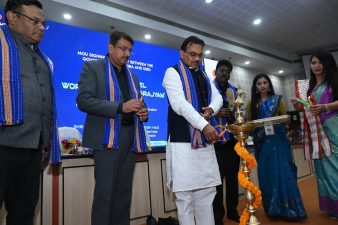
The Government of Tripura has recently signed a Memorandum of About (MOU) with the Digital India Bhashini Division (DIBD). This agreement aims to enhance the use of regional languages in digital governance. The initiative is part of the Digital India programme, promoting digital inclusivity across various linguistic communities. The signing ceremony took place at Pragna Bhavan in Agartala during the ‘Bhashini Rajyam’ workshop.
Background of Bhashini
Bhashini is a key initiative under the Digital India programme. It seeks to ensure seamless communication in 22 Indian languages. The project focuses on bridging digital and literacy divides through voice technology. It aims to facilitate better access to information for all citizens.
Key Features of Bhashini
Bhashini offers several innovative features. These include real-time translation, speech-to-text, text-to-speech, and voice-to-voice translation. The use of Artificial Intelligence (AI) and Natural Language Processing (NLP) enhances translation accuracy. This technology is essential for effective communication in regional languages.
Goals of the MOU
The MOU aims to promote regional languages in digital platforms. It seeks to reduce the digital divide, especially for rural and tribal communities. Language barriers often hinder access to software systems that operate primarily in English or Hindi.
Implementation Strategies
The workshop discussed various strategies for implementing Bhashini. These include integrating the initiative with existing systems like the CM Helpline and e-Districts. The goal is to enable multilingual communication and enhance local governance.
Impact on Governance
Bhashini is expected to improve governance in Tripura. It will facilitate better communication between citizens and government services. This supports initiatives like the CCTNS Platform, translating FIRs and enabling voice-based data entry.
Significance for Tripura
Tripura is the first northeastern state to sign this MOU. It marks step towards digital inclusivity and citizen-centric governance. The initiative positions Tripura among the leading states in promoting linguistic diversity.
Future Prospects
The integration of Bhashini into Tripura’s e-Governance software is a pioneering move. It promises cost-effective translations and supports inclusive policy implementation. This initiative will enhance regional identity and encourage a connected society.
Challenges Ahead
Despite its potential, challenges remain. Ensuring widespread adoption of Bhashini will require continuous training and support. Additionally, addressing the specific needs of diverse linguistic communities will be crucial for success.
Questions for UPSC:
- Examine the role of technology in promoting digital inclusivity in governance.
- Critically discuss the impact of language barriers on access to government services in India.
- Discuss in the light of recent initiatives, how regional languages contribute to national identity.
- With suitable examples, discuss the significance of Artificial Intelligence in enhancing public service delivery.
Answer Hints:
1. Examine the role of technology in promoting digital inclusivity in governance.
- Technology facilitates access to government services through digital platforms, ensuring wider reach.
- It enables real-time communication and interaction between citizens and government officials.
- Innovative tools like Bhashini help in overcoming language barriers, enhancing citizen participation.
- Digital literacy initiatives improve overall engagement with governance, especially in rural areas.
- Data analytics and AI can optimize service delivery by identifying citizen needs and preferences.
2. Critically discuss the impact of language barriers on access to government services in India.
- Language barriers limit the effectiveness of communication between citizens and government services.
- Rural and tribal populations often struggle with services primarily offered in English or Hindi.
- This leads to misinformation and underutilization of essential services and resources.
- Language inclusivity initiatives like Bhashini aim to bridge these gaps, promoting better access.
- Failure to address language barriers can exacerbate social inequalities and hinder governance.
3. Discuss in the light of recent initiatives, how regional languages contribute to national identity.
- Regional languages reflect the cultural diversity and heritage of different communities in India.
- Initiatives like Bhashini promote the use of these languages in official communication, enhancing their status.
- Language inclusivity encourages a sense of belonging and recognition among linguistic minorities.
- Supporting regional languages in governance strengthens the fabric of national unity and identity.
- It encourages pride in local culture while contributing to the overall narrative of a multilingual nation.
4. With suitable examples, discuss the significance of Artificial Intelligence in enhancing public service delivery.
- AI can streamline processes, reducing wait times and improving efficiency in service delivery.
- For instance, AI-driven chatbots can provide instant responses to citizen inquiries, enhancing accessibility.
- Real-time translation services, like those offered by Bhashini, facilitate communication in diverse languages.
- AI analytics can identify trends and areas needing improvement, allowing for targeted public service enhancements.
- These technologies ultimately lead to more responsive and accountable governance, benefiting citizens directly.