
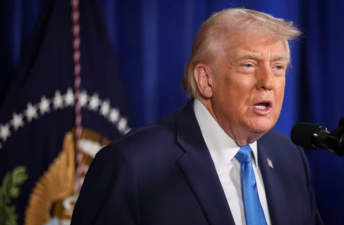
The world closely watched Donald Trump’s address at the World Economic Forum in Davos, particularly because key allies such as Canada, France, the UK, and the European Union had openly criticised his policies in the run-up to the summit. His long, meandering speech revealed a consistent theme: the belief that the United States under his leadership is underappreciated, unfairly burdened, and entitled to greater deference from allies. The address offered important insights into how a second Trump presidency views alliances, security, trade, and global order.
Greenland and America’s security worldview
Trump’s remarks on Greenland stood out for both tone and implication. While insisting that the US would not “use force” to acquire the territory, he framed Greenland as a strategic necessity for global security that only the US could defend. He invoked World War II history to argue that Denmark and Europe “owed” the US for past protection, turning a territorial question into a moral and strategic debt. The episode highlighted Trump’s transactional view of alliances, where historical support is converted into present-day leverage.
NATO through a transactional lens
Criticism of “” has been a constant in Trump’s political career, and Davos was no exception. He reiterated claims that the US bears a disproportionate burden of defence spending and receives little in return. While it is true that US defence expenditure far exceeds that of most allies, Trump’s assertion that NATO has given the US “nothing” overlooks the alliance’s political, strategic, and deterrence value — including the fact that NATO’s Article 5 was invoked only once, in support of the US after the 9/11 attacks.
Europe as partner, rival, and target
Throughout the speech, Trump oscillated between professing admiration for Europe and openly threatening it with tariffs and political pressure. He dismissed European climate policies as a “green scam” and blamed renewable energy transitions for high electricity prices and economic weakness. By singling out countries such as Germany, the UK, and Switzerland, Trump reinforced the idea that trade and environmental policy, in his worldview, are zero-sum contests rather than cooperative efforts.
Ukraine and the promise of deal-making
The ongoing war in Ukraine surfaced amid concerns that it could be overshadowed by other controversies. Trump suggested that both Russia and Ukraine were ready for a deal and portrayed himself as uniquely capable of brokering peace. He spoke of his relationship with “” and “”, framing the conflict as avoidable had he been in office earlier. His remarks reflected a preference for personalised diplomacy and quick settlements, even as European allies remain wary of any deal that weakens Ukraine’s security guarantees.
The American economy and contested claims
Trump projected the US as the unmatched engine of the global economy, crediting himself with massive investment inflows, low inflation, and trade victories. However, many of these claims remain disputed by official data and independent analyses. He also publicly criticised “”, accusing the Federal Reserve of acting too slowly on interest rates — underscoring Trump’s long-standing discomfort with central bank independence.
Tariffs, oil, and selective engagement
On energy and trade, Trump defended tariffs as tools of national revival while dismissing evidence that their costs fall largely on domestic consumers. He praised Venezuela’s prospects and claimed oil prices were historically low under his leadership, while criticising green energy transitions at home and abroad. This selective engagement — sanctions and tariffs on some, accommodation of others — reflects a flexible but unpredictable economic diplomacy.
Claims of peacemaking and global stature
Trump repeated assertions that he had stopped or ended multiple global conflicts, positioning himself as a natural peacemaker deserving of international recognition. These claims, often contested or exaggerated, serve a domestic political narrative but also signal how Trump frames US leadership — as decisive, personalised, and centred on individual authority rather than institutions.
China, immigration, and civilisational rhetoric
China featured repeatedly in Trump’s speech, both as an economic rival and as a foil in debates over renewable energy and technology. Even while criticising Chinese practices, he emphasised his personal rapport with “”. On immigration, Trump employed harsh and racially charged language, particularly targeting migrants and diaspora communities, reinforcing a civilisational framing of politics that resonates domestically but unsettles allies.
What this means for global order
Trump’s Davos speech offered fewer policy specifics than signals of intent. It underscored a worldview where alliances are conditional, multilateralism is secondary to national leverage, and global leadership is asserted through pressure rather than persuasion. For US allies and rivals alike, the message was clear: under Trump, predictability gives way to bargaining, and cooperation is filtered through the lens of immediate American advantage.
What to note for Prelims?
- Role of NATO and the significance of Article 5.
- Strategic importance of Greenland in Arctic geopolitics.
- Functions of the World Economic Forum.
What to note for Mains?
- Critically assess the impact of transactional diplomacy on alliances.
- Discuss how US domestic politics shape global governance.
- Examine implications of Trump’s foreign policy approach for India and the global order.