
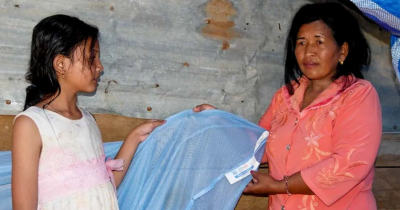
The World Malaria Report 2025, released in December by the World Health Organization, arrives at a critical juncture — five years before the global malaria elimination deadline of 2030. The report presents a complex picture: encouraging declines in cases across parts of the Asia-Pacific, but deepening concerns over drug resistance and shrinking global financing. Together, these trends underline both what is possible and what is at risk in the fight against one of the world’s oldest diseases.
Why the Asia-Pacific numbers stand out
Among global regions, the Asia-Pacific delivered some of the most positive signals in 2024. Estimated malaria cases in the region fell from about 9.6 million in 2023 to roughly 8.9 million in 2024. This decline was driven by progress in 10 of the 17 malaria-endemic countries, with Pakistan accounting for the largest absolute reduction. Cambodia, Lao PDR and Vietnam reported historic lows for the second consecutive year, reflecting sustained public health effort rather than short-term fluctuation.
These gains are particularly significant because the region has long been a testing ground for malaria control strategies — from early elimination drives to the management of drug resistance.
Drug resistance: the shadow over progress
Running parallel to these successes is a serious warning: rising resistance to artemisinin-based combination therapies (ACTs), the frontline treatment for malaria. Artemisinin resistance first emerged in Southeast Asia, and its spread threatens to erode decades of progress.
Here too, the Asia-Pacific presents a paradox. The Greater Mekong Subregion, once the epicentre of resistance, is now cited in the report for successfully containing and rolling back resistant strains through aggressive surveillance, treatment protocols and cross-border coordination. This experience demonstrates that resistance is not inevitable — but it requires sustained investment and regional cooperation.
Regional leadership and uneven trajectories
The Asia Pacific Leaders Malaria Alliance (Asia Pacific Leaders Malaria Alliance) brings together 22 governments committed to eliminating malaria by 2030. While several countries have achieved malaria-free status — including Sri Lanka, China and most recently Timor-Leste — progress across the region remains uneven.
Smaller or more cohesive health systems have moved faster, while larger, high-burden countries face persistent transmission pockets, logistical complexity and health system gaps. This unevenness explains why, despite regional success stories, the overall elimination trajectory remains fragile.
Financing gaps and the ‘last-mile’ problem
Perhaps the most troubling signal in the report is financial. In 2024, only about 42% of global malaria financing needs were met, and funding cuts in 2025 have widened this gap further. This shortfall directly affects “last-mile” delivery — the difficult, expensive work of reaching remote, mobile and marginalised populations where malaria transmission persists.
Without predictable, long-term financing, countries struggle to maintain surveillance systems, retain trained health workers and respond rapidly to outbreaks, increasing the risk of resurgence even in near-elimination settings.
India’s 2027 ambition: promise and pause
India has set an ambitious goal of achieving zero indigenous malaria cases by 2027, three years ahead of the global target. Since 2015, the country has recorded steep declines in both cases and deaths, with many districts sustaining zero transmission for multiple years. Indigenous projects have demonstrated that elimination is technically feasible.
However, recent data points to a plateau — and even rebounds in some areas — suggesting that India is currently off the trajectory required to meet its 2027 milestone. Five States and the northeastern region account for nearly 80% of the remaining burden, highlighting the need for sharply focused interventions rather than uniform national strategies.
Three shifts needed to move from control to elimination
Experts emphasise three strategic shifts for countries like India:
- Surveillance as the core intervention: Real-time, case-based surveillance must become universal, including systematic reporting from private healthcare, defence services, railways and urban systems.
- Hotspot-focused execution: High-burden States require project-mode, tightly monitored programmes, while near-elimination areas must invest in preventing resurgence.
- Sustained financing and accountability: Malaria elimination must be treated as a time-bound national mission, with uninterrupted funding and clear responsibility through the last mile.
Vaccines: a long-awaited breakthrough
Beyond surveillance and vector control, malaria vaccines mark a historic turning point. Two vaccines — RTS,S and R21 — have demonstrated the ability to reduce severe disease and child mortality. Large-scale pilots in Africa show that RTS,S can be effectively delivered through routine immunisation systems, while R21 has shown comparable or higher efficacy in controlled trials.
While vaccines are not a standalone solution, they add a powerful new layer to malaria control, especially in high-transmission settings.
What to note for Prelims?
- World Malaria Report 2025: publisher and key findings.
- Artemisinin-based combination therapies (ACTs) and drug resistance.
- Asia Pacific Leaders Malaria Alliance (APLMA).
- Malaria vaccines: RTS,S and R21.
- India’s malaria elimination target year (2027).
What to note for Mains?
- Evaluate the uneven progress towards malaria elimination in the Asia-Pacific.
- Discuss the implications of antimalarial drug resistance for global health security.
- Analyse India’s malaria elimination strategy and the challenges in last-mile delivery.
- Examine the role of vaccines alongside surveillance and vector control in elimination efforts.