
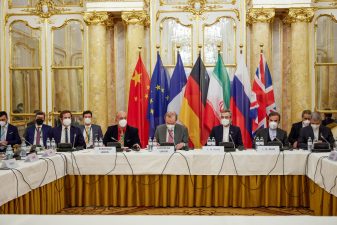
In late 2024, US President Donald Trump expressed a willingness to renegotiate the Iran nuclear deal. This came as Iran faced severe economic challenges and a changing geopolitical landscape. Trump’s outreach to Iran marks shift from his previous stance when he withdrew from the Joint Comprehensive Plan of Action (JCPOA) in 2018.
Background of the Iran Nuclear Deal
The JCPOA was established in 2015 between Iran and the P5+1 nations. It aimed to limit Iran’s nuclear capabilities in exchange for sanctions relief. Iran agreed to restrict uranium enrichment to 3.67%, suitable for peaceful purposes. The deal included oversight by the International Atomic Energy Agency (IAEA).
Trump’s Withdrawal from the JCPOA
In 2018, Trump withdrew the US from the JCPOA, calling it “one of the worst deals.” He aimed to renegotiate terms, citing concerns over Iran’s ballistic missile programme and regional activities. The withdrawal led to a series of sanctions, which impacted Iran’s economy.
Impact of Sanctions on Iran
Following the US withdrawal, Iran faced extensive sanctions that crippled its economy. The EU attempted to maintain the deal through a Blocking Statute but struggled to protect European businesses. By 2019, Iran began rolling back its commitments under the JCPOA, despite remaining a formal participant.
The Role of the IAEA and European Nations
The IAEA confirmed Iran’s compliance with the JCPOA until 2018. European nations continued to advocate for the deal, but their efforts were undermined by US sanctions. As Iran increased uranium enrichment, tensions escalated, leading to concerns over potential nuclear weaponisation.
Recent Developments and Negotiations
By 2023, negotiations had stalled amid rising regional tensions, particularly following the Israel-Iran conflict. The assassination of Iranian nuclear scientist Mohsen Fakhrizadeh further complicated the situation. However, the election of President Masoud Pezeshkian in late 2024 prompted Iran to seek engagement with the US.
Shifts in Geopolitical Dynamics
The changing dynamics in the Middle East have influenced Trump’s approach. Increased cooperation between Iran and Gulf nations, alongside Israel’s declining popularity, has created a new context for negotiations. Trump’s recent comments reflect an attempt to navigate these complexities while addressing the Iranian nuclear issue.
Challenges Ahead
Despite the potential for dialogue, trust issues remain between Washington and Tehran. Both sides hold grievances stemming from the JCPOA’s collapse. Any new agreement must address the sunset clauses and ensure long-term limitations on Iran’s nuclear ambitions.
Questions for UPSC:
- Critically examine the implications of the US withdrawal from the Iran nuclear deal on global non-proliferation efforts.
- Discuss the role of the International Atomic Energy Agency in monitoring nuclear agreements, with examples from the Iran case.
- What are the economic impacts of sanctions on a nation’s internal stability? Illustrate with the case of Iran.
- Explain the significance of geopolitical alliances in the Middle East regarding nuclear negotiations, particularly between Iran and its neighbours.
Answer Hints:
1. Critically examine the implications of the US withdrawal from the Iran nuclear deal on global non-proliferation efforts.
- US withdrawal undermined the credibility of multilateral agreements, setting a precedent for future negotiations.
- It encouraged other nations to pursue their nuclear ambitions, fearing similar unilateral actions from the US.
- Increased tensions in the Middle East heightened the risk of nuclear proliferation among regional adversaries.
- Global non-proliferation norms weakened as trust diminished between nuclear and non-nuclear states.
- International organizations faced challenges in enforcing compliance and monitoring nuclear activities effectively.
2. Discuss the role of the International Atomic Energy Agency in monitoring nuclear agreements, with examples from the Iran case.
- IAEA ensures compliance through regular inspections and monitoring of nuclear facilities under agreements like the JCPOA.
- In the Iran case, IAEA confirmed Iran’s adherence to enrichment limits until the US withdrawal in 2018.
- The Agency provides technical expertise and facilitates dialogue between nations regarding nuclear issues.
- IAEA’s reports influence international perceptions and responses to nuclear developments, impacting diplomatic relations.
- Challenges arise when political tensions hinder the IAEA’s ability to operate freely and effectively.
3. What are the economic impacts of sanctions on a nation’s internal stability? Illustrate with the case of Iran.
- Sanctions can lead to economic contraction, resulting in high inflation and unemployment rates, as seen in Iran post-2018.
- Restricted access to international markets can cripple essential sectors like energy and finance, destabilizing the economy.
- Public discontent may rise due to deteriorating living conditions, leading to protests and social unrest.
- Sanctions can exacerbate existing political divisions, weakening governmental authority and stability.
- Long-term sanctions may force nations to adapt, sometimes leading to increased militarization or reliance on alternative alliances.
4. Explain the significance of geopolitical alliances in the Middle East regarding nuclear negotiations, particularly between Iran and its neighbours.
- Geopolitical alliances shape the power dynamics and influence negotiations, as regional actors have vested interests in Iran’s nuclear capabilities.
- Countries like Saudi Arabia and Israel actively oppose Iran’s nuclear ambitions, advocating for stricter measures and sanctions.
- Shifts in alliances, such as Iran’s rapprochement with Gulf states, impact the negotiation landscape and potential concessions.
- Regional stability is interconnected; a nuclear-armed Iran could provoke an arms race among neighboring states.
- Effective negotiations require addressing the security concerns of all involved parties to achieve lasting agreements.