
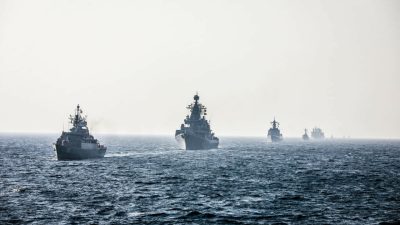
India and the United States are enhancing their collaboration in the Indian Ocean Region. The inaugural U.S.-India Indian Ocean Dialogue is set for November 14, 2024. Key officials from both nations will participate virtually. This meeting aims to discuss security and prosperity in the Indo-Pacific region.
Background of U.S.-India Cooperation
The partnership between India and the U.S. in the Indo-Pacific has evolved over several years. This cooperation gained momentum during President Barack Obama’s visit to India in January 2015. Both nations issued a Joint Strategic Vision for the Asia-Pacific and Indian Ocean Region. This laid the groundwork for ongoing diplomatic and military engagements.
Significance of the Indian Ocean Dialogue
The dialogue aims to address critical issues affecting the Indian Ocean Region. It provides a platform for both countries to discuss strategies for enhancing regional security. The U.S. State Department emphasises the importance of promoting prosperity throughout the Indo-Pacific. This is crucial for maintaining stability in the face of emerging threats.
Technological Collaboration Initiatives
The Critical and Emerging Technologies (iCET) initiative is a focal point for U.S.-India technological cooperation. This initiative seeks to expand collaboration in innovation and production of high technologies. National Security Adviser Ajit Doval leads this effort alongside his U.S. counterpart, Jake Sullivan. This partnership is vital for both nations to stay competitive in global technology.
Impact of Recent U.S. Elections
The timing of this dialogue is important. It follows the recent U.S. Presidential elections, where former President Donald Trump won decisively. This transition may influence U.S. foreign policy in the Indo-Pacific. The new administration may seek to reinforce ties with India, especially in security and technology sectors.
Regional and Multilateral Cooperation
The Quad grouping, which includes India, Australia, Japan, and the U.S., plays important role in regional dynamics. This coalition focuses on maritime security and has launched the Indo-Pacific Maritime Domain Awareness initiative. Such multilateral efforts are essential for addressing common challenges in the Indian Ocean.
Future Prospects
The U.S.-India dialogue is expected to pave the way for deeper cooperation. Both countries are likely to explore joint initiatives that enhance maritime security. Future discussions may also include economic partnerships and addressing climate change impacts in the region.
Questions for UPSC:
- Critically analyse the implications of the U.S.-India Indian Ocean Dialogue on regional security dynamics.
- What are the key objectives of the Critical and Emerging Technologies initiative? Explain its significance in U.S.-India relations.
- With suitable examples, comment on the role of the Quad grouping in promoting maritime security in the Indo-Pacific region.
- Explain the impact of the recent U.S. Presidential elections on Indo-U.S. strategic partnerships. What changes might occur?
Answer Hints:
1. Critically analyse the implications of the U.S.-India Indian Ocean Dialogue on regional security dynamics.
- The dialogue aims to enhance security cooperation between the U.S. and India, addressing common threats in the Indian Ocean Region (IOR).
- It provides a platform for both nations to develop strategies for countering regional challenges, such as piracy and terrorism.
- The U.S. reaffirms its commitment to a free and open Indo-Pacific, which can deter aggressive actions from other regional powers.
- Strengthening ties could lead to increased military exercises and intelligence sharing, enhancing overall regional stability.
- The dialogue also promotes multilateral cooperation through frameworks like the Quad, thereby encouraging collective security efforts.
2. What are the key objectives of the Critical and Emerging Technologies initiative? Explain its significance in U.S.-India relations.
- The iCET initiative aims to enhance collaboration in high technology sectors, including artificial intelligence and cybersecurity.
- It seeks to promote joint research and development projects, thereby boosting innovation in both countries.
- Strengthening technological ties is crucial for economic growth and competitiveness in global markets.
- This initiative reflects a strategic partnership that extends beyond defense to encompass economic and technological domains.
- It also aims to address global challenges, such as climate change, through innovative solutions and shared technologies.
3. With suitable examples, comment on the role of the Quad grouping in promoting maritime security in the Indo-Pacific region.
- The Quad, comprising India, Australia, Japan, and the U.S., focuses on enhancing maritime security through joint naval exercises, such as Malabar.
- The Indo-Pacific Maritime Domain Awareness initiative launched by the Quad aims to improve surveillance and information sharing among member countries.
- Quad nations have coordinated responses to regional threats, such as China’s assertive maritime claims, promoting a rules-based order.
- Through humanitarian assistance and disaster relief operations, the Quad demonstrates its commitment to regional stability and security.
- The grouping also facilitates dialogues on security challenges, encouraging a collaborative approach to maritime issues in the Indo-Pacific.
4. Explain the impact of the recent U.S. Presidential elections on Indo-U.S. strategic partnerships. What changes might occur?
- The election of former President Donald Trump may lead to a renewed focus on strengthening defense and technological ties with India.
- Expect a potential shift in U.S. foreign policy towards a more assertive stance in countering China’s influence in the Indo-Pacific.
- The transition could result in increased military collaboration and joint exercises, enhancing India’s strategic capabilities.
- Economic partnerships may also be prioritized, with efforts to boost trade and investment between the two nations.
- Changes in diplomatic approaches may occur, focusing on multilateral engagements with allies in the region to address common security threats.