
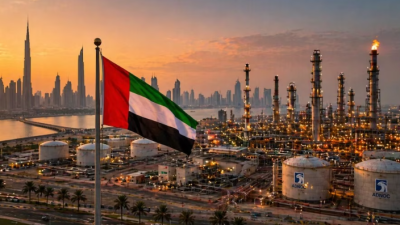
The United Arab Emirates (UAE) has announced its withdrawal from the Organization of the Petroleum Exporting Countries (OPEC) and the wider OPEC+ alliance, with the decision set to take effect from 1 May 2026. The UAE joined OPEC in 1967 through Abu Dhabi, and its exit ends a membership that lasted for nearly six decades.
OPEC and OPEC+
OPEC is an intergovernmental organisation of oil-exporting countries formed in 1960 to coordinate petroleum policies among member states. OPEC+ is a broader grouping that includes OPEC members and non-OPEC producers, including Russia, for coordinated output management.
UAE’s Production Policy
The UAE has linked the decision to a review of its production policy and capacity outlook. The state-controlled Abu Dhabi National Oil Company, or Adnoc, has a target of raising crude production capacity to 5 million barrels per day by 2027.
- The exit removes formal output constraints under the OPEC and OPEC+ framework.
- The UAE can raise oil production more freely, subject to market demand and domestic planning.
- The decision follows years of disagreement with Saudi Arabia over production quotas.
Energy Market Context
The move comes during volatility in global energy markets and disruptions to shipping in the Strait of Hormuz, a narrow waterway between the Persian Gulf and the Gulf of Oman. The Strait of Hormuz is a major route for crude oil and liquefied natural gas exports from Gulf producers.
Global Oil Market Relevance
OPEC has historically used production quotas to influence global oil supply and prices. The UAE’s departure alters the composition of a producer group that has shaped international oil policy since 1960.
Last Modified: April 29, 2026