
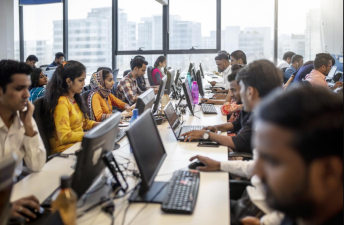
The US has recently intensified trade barriers and tightened immigration policies. This includes the proposed Halting International Relocation of Employment (HIRE) Act in the Senate. The Act aims to boost American jobs by discouraging outsourcing. However, it carries complex implications for the Indian IT sector and thousands of Indian STEM students in the US.
Overview of the HIRE Act
The HIRE Act proposes a 25 per cent excise tax on payments to foreign service providers. It also denies tax deductions for these expenses. This could raise the cost of offshored IT services by nearly 60 per cent after taxes. Additional tariffs, like a 50 per cent duty on imported hardware, may further increase costs for US tech companies.
Impact on Indian IT Sector
India’s IT industry earns about 60 per cent of its revenue from exports. The HIRE Act threatens to increase operational costs . Smaller IT firms will face severe challenges. The higher costs may push US companies to reduce offshore contracts and hire more locally. However, sudden shifts could disrupt existing business models, increase costs, and reduce resilience.
Effect on Indian STEM Students in the US
The Bill’s broad definition of foreign person may include non-immigrant visa holders such as F1 students. This could subject wages paid to international students under the Optional Practical Training scheme to the same excise tax. Such a move may reduce job opportunities for Indian STEM graduates in the US, despite their critical role in the tech workforce.
US STEM Talent Shortage and Economic Logic
The US faces a shortage of domestic STEM graduates, especially in AI, cybersecurity, and semiconductor design. Indian students graduating from US universities offer culturally adapted and well-trained talent. Despite protectionist rhetoric, outsourcing to India remains 20-40 per cent cheaper than onshore alternatives. Abrupt reshoring is costly and disruptive.
Strategic Implications for India
India must prepare students for uncertainty by diversifying global education and career destinations. Countries like Germany, Canada, and Australia are gaining popularity among Indian students. Simultaneously, India’s IT sector should invest in advanced technologies such as AI, biotech, and deep R&D. This will keep Indian talent globally competitive regardless of US immigration changes.
Political and Economic Outlook
The HIRE Act’s passage is uncertain. Previous similar bills stalled due to corporate lobbying. However, rising protectionism gives this Bill a stronger chance. Indian stakeholders cannot ignore the risks. Strategic planning and adaptability are essential to navigate the evolving global tech and talent landscape.
Questions for UPSC:
- Critically discuss the impact of protectionist trade policies on global IT outsourcing and international labour mobility.
- Analyse the role of STEM education in addressing talent shortages and its implications for economic competitiveness in developed countries.
- Examine the challenges and opportunities for emerging economies like India in adapting to shifting global technology and immigration policies.
- Estimate the effects of immigration reforms on international students and their contribution to host country innovation and economic growth.