
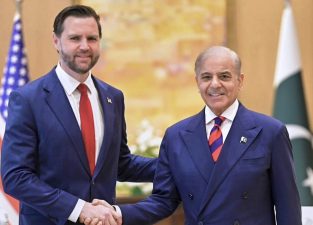
The US-Iran negotiations held in Islamabad concluded on 12 April 2026 after 21 hours of talks without an agreement. The delegation was led by US Vice President JD Vance and Iranian Parliament Speaker Mohammad Baqer Qalibaf. This was the first high-level direct engagement between the two nations since 1979. The talks followed a temporary ceasefire agreed on 8 April 2026.
Nuclear Weapons Commitment
The US demanded a long-term, affirmative commitment from Iran not to pursue nuclear weapons or rapid nuclear weapons development capabilities. Iran rejected this demand, citing its right to peaceful nuclear activities. Iran’s existing nuclear enrichment facilities had been reportedly destroyed in recent operations, but the US sought a fundamental commitment to prevent future weaponisation.
Strait of Hormuz Control
A major dispute concerned control over the Strait of Hormuz, a strategic international waterway. Iran demanded increased authority over the Strait, while the US insisted it remain fully open for international navigation. Iranian sources stated the Strait remained closed after the talks failed.
Sanctions, Reparations, and Asset Release
Iran sought the complete lifting of US sanctions and demanded war reparations as recognition of its rights. The US did not agree to these terms. Discussions also covered the potential release of frozen Iranian assets held by the US, but no consensus was reached.
Official Responses and Mediation
US Vice President Vance described the US proposal as the “final and best offer” before departing Islamabad. Iranian officials blamed the collapse on excessive US demands but noted progress on minor issues. Both sides thanked Pakistan for its role as a neutral mediator during the talks.
What to Study for UPSC Exams?
- International Nuclear Non-Proliferation Regimes
- Geostrategic Importance of Strait of Hormuz
- Sanctions as Foreign Policy Tools
- Pakistan’s Role in Regional Diplomacy
International Nuclear Non-Proliferation Regimes
The Treaty on the Non-Proliferation of Nuclear Weapons (NPT) entered into force in 1970, aiming to prevent nuclear weapon spread. The International Atomic Energy Agency (IAEA) monitors compliance through safeguards and inspections. Non-signatory states like India, Pakistan, and Israel remain outside the regime, complicating global enforcement.
Geostrategic Importance of Strait of Hormuz
About 20% of global petroleum passes through this 33 km-wide chokepoint between the Persian Gulf and Gulf of Oman. Control impacts global energy security and naval power projection. Closure or disruption can spike oil prices and destabilize regional and global economies.
Sanctions as Foreign Policy Tools
Economic sanctions restrict trade and financial transactions to influence state behavior without military action. Secondary sanctions target third parties engaging with sanctioned countries. Their effectiveness varies, often causing humanitarian impacts alongside political pressure.
Pakistan’s Role in Regional Diplomacy
Pakistan acts as a mediator in South Asian conflicts, leveraging ties with both the US and Iran. It hosts Afghan peace talks and maintains strategic partnerships with China and Gulf states. Its geographic position makes it pivotal in Eurasian connectivity projects.
Last Modified: April 12, 2026