
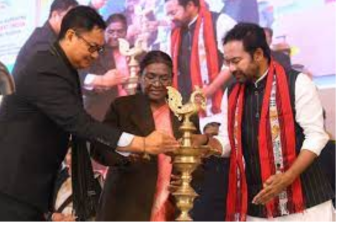
Rashtrapati Bhavan, the official residence of the President of India, recently hosted ‘Vividhata Ka Amrit Mahotsav’ – a festival celebrating the vibrant cultural diversity of the country. The week-long event was organized by the Ministry of Culture to commemorate 75 years of independence and bring together performances from various states and union territories.
Overview of Performances
The festival witnessed a vivid display of India’s composite culture and heritage through 37 dance performances from across 28 states and 8 union territories. From the graceful Bharatanatyam of Tamil Nadu to the energetic Chhau dance from Jharkhand, the event highlighted the ‘unity in diversity’ that characterizes the cultural fabric of the nation.
In his inaugural address, Honorable President Droupadi Murmu emphasized the significance of cultural harmony and mutual understanding in strengthening national unity.
Vivid Display of Indian Dance Diversity
- Number of dance forms: 21 classical and folk
- States represented: 28 states, 8 union territories
- Number of performers: Over 300
Performance Breakdown
- Dance styles:
- Classical – Bharatanatyam, Kathakali, Manipuri, Odissi
- Folk – Chhau, Garba, Lavani, Panthi, Gair
- Costumes and props:
- Elaborate face paint, masks,dummies
- Colourful traditional attires
- Clay pots, swords, etc
- Themes depicted:
- Mythology, nature worship, harvest festivals
- Martial arts, acrobatics
- Spiritual devotion
- Music and instruments:
- Live music with drums, cymbals, flutes
- Folk and devotional songs
- Troupe sizes:
- Solo 1-minute dances
- 15+ minute choreographed acts
- 20-30 coordinated dancers
Key Highlights
- Showcased extraordinary richness and diversity of Indian dance culture
- United arts and heritage from Kashmir to Kanyakumari
- Honored unifying ethos – “Ek Bharat, Shrestha Bharat”
- Promoted appreciation for lesser known dance forms
- Triggered renewed commitment to preserve traditions
- Received extensive domestic and global media coverage
Highlights of Dance Performances at the Festival
| State/UT | Dance Form | Key Features |
| Andhra Pradesh | Kuchipudi | Captivating mudras and fluid movements |
| Assam | Sattriya | Devotion-themed with cymbals and beats |
| Bihar | Chhau | Vibrant costumes and masks with martial postures |
| Chhattisgarh | Panthi | Folk dance venerating nature |
| Goa | Dashavatara Kala | Depicts ten avatars of Lord Vishnu |
| Gujarat | Garba | Colorful traditional attire with clay pots |
| Haryana | Rasiya | Playful dance symbolizing virtues of Krishna |
| Himachal Pradesh | Nati | Joyous community dance with clapping |
| Jharkhand | Chhau | Acrobatics and vigorous masks/headdresses |
| Karnataka | Yakshagana | Elaborate dresses and face paint in folk theatre style |
| Kerala | Mohiniyattam | Graceful interpretive dance in white sarees |
| Ladakh | Brokpas Atoos | Round dance by indigenous Brokpa tribe |
| Madhya Pradesh | Panthi | Devotional folk culture with wooden dummy horses |
| Maharashtra | Lavani | Upbeat dance interspersed with Dulhan songs |
The extravaganza culminated with performances from the northeastern states, portrayed as the crescendo of dance and vitality. The event received extensive media coverage and highlighted India’s rich cultural history to the world.
Key Objectives
As part of the Azadi ka Amrit Mahotsav initiative, the Ministry of Culture organized the festival to:
- Showcase the diversity in Indian dance and cultural traditions across states
- Provide exposure to lesser known folk and classical dance forms
- Promote cultural exchange and awareness between states
- Strengthen national integration through arts and culture
- Commemorate 75 years of independence by exhibiting living heritage
Key Highlights
- Over 300 artists performed at the week-long festival
- The event demonstrated more than 20 distinct classical and folk dance forms
- Dancers wore vibrant costumes and face paint to represent regional cultures
- Performances incorporated styles like acrobatics, martial arts, and theatre traditions
- Artists specialized in disciplines requiring intense training like Mohiniyattam
- Dances depicted mythological tales, nature worship, and social themes
- Live music with traditional instruments accompanied several acts
- Troupe sizes ranged from solo dancers to over 30 coordinated artists
- The President honored select performers at the end of the festival.
Last Modified: February 12, 2024