
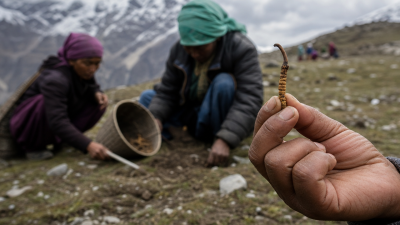
19 June 2026: Seasonal mass migration to Himalayan pastures for Yarsa Gumba collection continues amid record district prices, export flows and targeted conservation measures.
Biology and Habitat
- Scientific identity: Ophiocordyceps sinensis; a fungus–caterpillar complex that parasitises larvae of Hepialidae (ghost moth).
- Elevation and habitat: Alpine meadows above 3,500 metres; collection often occurs above 4,000 metres.
- Active compounds: Cordycepin, polysaccharides, adenosine; studied for antiviral, anti‑inflammatory, immunomodulatory and cardiovascular effects.
Collection Season and Socio‑economic Facts
- Season: Typically April–June; districts with intensive harvesting include Mugu, Dolpa, Jumla and Gorkha.
- Household dependence: Example — Chhekampar (Gorkha): nearly all 812 households moved to pastures above 4,000 m for 2026 season.
- Yield trends: Declines documented since 2008; attributed to overextraction and climate change (reduced snowfall).
- Collection hazards: Altitude sickness and accidents; police data record 18 deaths in Dolpa over four years, including three in the 2026 season.
Market, Trade and Routes
- Price evolution: About Rs. 315/kg in 1992 to district‑level rates of USD 22,000–30,000/kg in 2024.
- Exports: >1,277 kg worth >USD 4.7 million exported in first eight months of FY 2024/25; major importers Hong Kong and China.
- Trade route: Most collected material moves via Kathmandu to Tibet and China.
Conservation, Regulation and Management
- Regulatory actions: Division Forest Office delayed pasture opening until late May 2026 in Dolpa as a conservation measure.
- Protected‑area protocol: Makalu Barun National Park opened collection 8 June–8 July 2026 with fixed entry fees and prohibited items.
- Management challenge: Resource scarcity, high prices and mass migration create enforcement and sustainability pressures.
IASPOINT Booster Facts
- Taxonomy note: Family Ophiocordycipitaceae; host association with Hepialidae larvae is key to life cycle.
- Valuation: Often compared to precious metals per kilogram in regional markets.
- Policy tools: Seasonal closures, fixed fees and entry limits are used for in‑situ conservation and harvest regulation.