
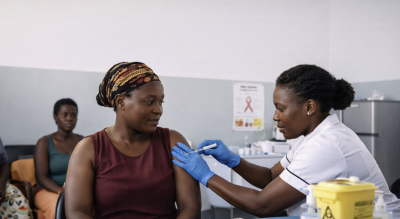
Zimbabwe has begun administering Lenacapavir, a breakthrough long-acting injectable for HIV prevention, positioning itself among the first countries globally to deploy this next-generation pre-exposure prophylaxis (PrEP). The rollout, launched on February 19 in Epworth near Harare, marks a significant step in the country’s effort to curb new infections—especially among adolescents, girls, young women, and other high-risk groups.
What Is Lenacapavir and Why Is It Significant?
Lenacapavir is the first twice-yearly injectable PrEP for HIV prevention. Unlike daily oral PrEP pills, it requires only two doses per year, offering a practical alternative for individuals who struggle with adherence, stigma, or limited healthcare access.
Developed by [“Gilead Sciences”,”us biopharmaceutical company”], the drug works by inhibiting HIV replication at an early stage. As a long-acting injectable, it ensures sustained protection over six months.
Key features include:
- Two injections per year.
- Highly effective biomedical prevention option.
- Designed for HIV-negative individuals only.
- No replacement for vaccines or ART; strictly preventive.
Public health experts emphasise that Lenacapavir complements, rather than replaces, existing prevention methods.
Zimbabwe’s Rollout Strategy and Target Groups
The programme, funded by the United States government and the Global Fund, begins with 46,000 doses distributed across 24 high-burden districts.
Priority groups include:
- Adolescent girls and young women.
- Sex workers.
- Homosexuals and other key populations.
- Pregnant and breastfeeding women at high risk.
Zimbabwe is among nine countries selected by the [“World Health Organization”,”un health agency”] for early access to the injection, reflecting the country’s strategic importance in global HIV prevention.
Combination Prevention: No ‘Magic Bullet’ Approach
Health authorities stress that Lenacapavir strengthens Zimbabwe’s combination HIV prevention strategy. The country has progressively adopted all major WHO-recommended PrEP options:
- Oral PrEP (introduced in 2016).
- Dapivirine vaginal ring (2021).
- Long-acting injectable cabotegravir (2024).
- Now Lenacapavir (2025 rollout phase).
Zimbabwe’s prevention model combines:
- Behavioural interventions (abstinence, monogamy, reduced concurrent partnerships).
- Biomedical tools (testing, condoms, STI management, PEP, PrEP).
- Structural interventions addressing gender inequality and stigma.
Officials have clarified that Lenacapavir is not for people already living with HIV and does not replace antiretroviral therapy (ART).
Zimbabwe’s HIV Burden and Progress
Zimbabwe was among the hardest-hit countries during the peak of the HIV/AIDS crisis. In 1997, nearly 27% of adults were HIV positive, with AIDS-related deaths peaking between 2002 and 2004.
Since then, significant progress has been made:
- Achievement of the 95-95-95 targets set by [“UNAIDS”,”un hiv program”].
- Expanded access to ART.
- Declining overall infection rates.
However, new infections remain concerning, particularly among young women aged 15–24. The rollout of long-acting prevention tools aims to address this persistent gap.
Sub-Saharan Africa: The Global Epicentre
The HIV/AIDS pandemic has killed over 44 million people since the early 1980s. Sub-Saharan Africa remains disproportionately affected:
- About 27 million of the 41 million people living with HIV are in the region.
- The region accounts for nearly 67% of global cases.
- Approximately 700,000 new infections occur annually.
- Roughly 300,000 AIDS-related deaths occur each year.
Given this epidemiological reality, new biomedical interventions are prioritised in African countries to accelerate progress toward ending AIDS as a public health threat by 2030.
Why This Rollout Matters Globally
Zimbabwe’s adoption of Lenacapavir represents more than a national milestone. It signals:
- Growing acceptance of long-acting biomedical technologies.
- Shifting HIV prevention from daily adherence to sustained protection models.
- Enhanced privacy and autonomy for vulnerable populations.
- Potential replication in other high-burden countries.
If successful, the rollout could reshape HIV prevention strategies globally, particularly in resource-constrained settings where adherence remains a major challenge.
What to Note for Prelims?
- Lenacapavir is a twice-yearly injectable PrEP for HIV prevention.
- It is developed by Gilead Sciences.
- It is meant for HIV-negative individuals only.
- Zimbabwe is among the first countries to roll it out.
- UNAIDS 95-95-95 targets relate to testing, treatment, and viral suppression.
What to Note for Mains?
- Discuss the role of long-acting biomedical innovations in public health.
- Examine the importance of combination HIV prevention strategies.
- Analyse gendered vulnerabilities in HIV transmission in Sub-Saharan Africa.
- Evaluate the challenges in achieving the global 2030 AIDS-free target.