
On January 26, 2026, the presence of the European Union’s institutional leadership as chief guests at India’s Republic Day parade will signal a quiet but consequential shift in India’s foreign policy strategy. Rather than spotlighting one partner country, India is foregrounding coalitions and institutions. This choice reflects a larger reality: in a fragmented world, India’s diplomatic advantage lies less in classic bilateralism and more in what can be called global “white spaces” — areas where leadership is needed, but no single power can convincingly lead.
Why 2026 marks a turning point in India’s diplomacy
India enters 2026 amid persistent geopolitical stress. Its neighbourhood demands constant management, relations with Washington bring trade and technology frictions, and ties with Beijing remain structurally tense. In such conditions, India’s scope for big bilateral breakthroughs is limited. Instead, opportunities are emerging in multilateral gaps — crowded global problems where coordination is essential, yet traditional powers are constrained by rivalry or domestic politics. These white spaces allow India to act as a convenor, coalition-builder, and rule-shaper.
Europe as India’s technocratic test
The Republic Day presence of “” and “” underlines the renewed push for the long-pending India–EU Free Trade Agreement. India’s real engagement here is not with individual capitals but with the EU’s collective authority over trade, competition, data governance, and climate standards. If framed as a de-risking compact, the agreement could deepen India’s access to European markets, integrate it into restructured value chains, and provide partial insulation against U.S. trade pressures — albeit at the cost of higher compliance burdens for Indian firms.
BRICS and the politics of balance
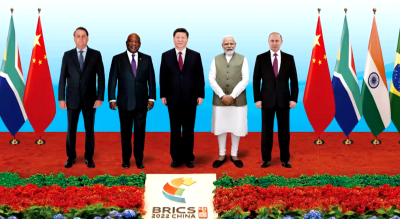
If Europe is the technocratic test, “” is the political one. Expansion has increased BRICS’ global footprint but diluted its coherence, as members differ on priorities and pace. As chair and host in 2026, India faces a defining question: can BRICS be steered from rhetoric to delivery? Many members seek stronger Global South representation and credible development finance alternatives, but India must prevent the forum from sliding into anti-West posturing or aggressive de-dollarisation narratives that could deter Western investment and technology flows.
Functional delivery through the New Development Bank
India’s most productive role in BRICS lies in making it operational rather than ideological. Better use of guarantees and instruments of the “” could translate declarations into projects. This would allow BRICS to demonstrate reform without rejection — a distinction central to India’s broader foreign policy positioning.
The Quad as a provider of public goods
The third white space is the “”. A Quad leaders’ summit hosted by India could even feature U.S. President “”, raising both visibility and expectations. The Quad’s value lies in offering practical services — maritime domain awareness, resilient port infrastructure, and disaster response — especially for Indian Ocean littoral states that seek capacity without entanglement in great-power rivalry. India’s experience with rapid humanitarian deployments shows how such capabilities can be quietly effective.
Limits of big multilateral tables
The United Nations remains central for legitimacy and norm-setting but is increasingly paralysed on delivery. The “” reflects similar strain: domestic politics, agenda battles, and selective participation have weakened its inclusiveness. As outcomes migrate away from universal forums, smaller coalitions with shared purpose are becoming more influential.
New tables, new choices for India
India’s AI Impact Summit in Delhi in February 2026 will test its ability to convene governments, companies, and researchers around overlapping interests. At the same time, Washington is experimenting with new formats — from a proposed “Board of Peace” to capability clubs like Pax Silica for AI and semiconductor supply chains. India’s challenge is not to join every table, but to choose selectively and ensure that participation translates into influence.
What to note for Prelims?
- EU institutional leadership as Republic Day chief guests in 2026.
- Concept of diplomatic “white spaces”.
- India’s roles in BRICS, Quad, and India–EU FTA talks.
- New Development Bank and its relevance.
What to note for Mains?
- Explain the idea of white space diplomacy and its relevance for India.
- Assess India’s balancing role within BRICS amid geopolitical polarisation.
- Discuss how minilateral groupings like the Quad differ from universal forums.
- Analyse why delivery-oriented coalitions matter in a fragmented global order.