
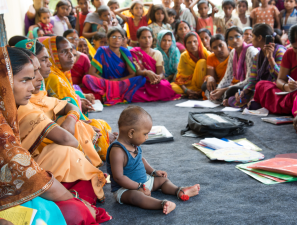
Often working below the radar of headline-driven policy debates, the Deendayal Antyodaya Yojana National Rural Livelihoods Mission has quietly transformed the socio-economic landscape of rural India. By mobilising nearly 10 crore households into an expansive network of Self-Help Groups, federations and community institutions, the programme has emerged as one of the most significant instruments of women-led development. As the scheme prepares for appraisal ahead of its next phase from 2026–27 to 2030–31, the moment is ripe to reflect on both its achievements and the reforms needed to sustain momentum.
A Silent Scale-Up of Collective Finance and Livelihoods
The scale of the NRLM ecosystem is unprecedented. Over 91 lakh Self-Help Groups (SHGs) have been federated into more than 5.35 lakh Village Organisations and 33,558 Cluster-Level Federations (CLFs). Together, these institutions have mobilised bank credit exceeding ₹11 lakh crore, while maintaining a remarkably low non-performing asset ratio of around 1.7%.
Equally striking is the social outcome. More than two crore women have crossed the ₹1 lakh annual income threshold, earning the title of “Lakhpati Didis”. This reflects not just improved access to credit, but the emergence of a confident cohort of rural women entrepreneurs.
Beyond Income: Political and Social Empowerment
Economic mobilisation has spilled over into political visibility. Many State governments now recognise women’s collectives as critical stakeholders and have increasingly focused on unattached Direct Benefit Transfer schemes. Examples include Ladli Laxmi Yojana in Madhya Pradesh, Maiya Samman Yojana in Jharkhand, and Ladki Bahin Yojana in Maharashtra. In Bihar, over one crore women recently received ₹10,000 each under the Mukhyamantri Mahila Rozgar Yojana.
Such transfers, layered over the NRLM platform, have the potential to catalyse entrepreneurship rather than merely supplement consumption — provided institutional capacity is strengthened at the grassroots.
CLFs as the Institutional Backbone — and the Weak Link
At the heart of the NRLM architecture lie the Cluster-Level Federations, sub-block level registered bodies where programme activities converge. Originally envisioned as autonomous, community-owned institutions, CLFs increasingly face criticism for becoming extensions of government machinery, with limited decision-making autonomy.
Revitalising CLFs is therefore central to the next phase of NRLM. Successful models such as Kudumbashree in Kerala and Jeevika in Bihar demonstrate that strong, independent federations can balance accountability with community leadership.
Managing Idle Funds and Strengthening Accountability
A growing concern is the large volume of funds lying with community institutions. Capitalisation support alone has crossed ₹56.69 lakh crore, apart from funds from Central and State governments and accrued interest. Without robust oversight, such resources are vulnerable to misuse.
The way forward lies in institutionalising community monitoring through social audits, complemented by mandatory statutory audits of CLFs. Equally important is flexibility in savings and loan products. Uniform interest rates and repayment periods do not reflect the diverse needs and capacities of members. Empowering communities to design context-specific financial products would ensure more judicious and equitable use of funds.
From Group Credit to Individual Financial Identity
While SHG-bank linkage has expanded access to credit, many members find loan sizes inadequate once their enterprises stabilise. Scaling up requires individual loans, but the absence of personal credit histories remains a bottleneck.
Generating individual CIBIL scores for SHG members is therefore critical. CLFs can also play a proactive role in facilitating individual loans and monitoring repayments, replicating their success with group lending. Such involvement could significantly enhance bank confidence in extending higher-value credit.
Innovative Finance and the Need for Convergence
As the rural economy diversifies, NRLM must move beyond debt-centric models. Innovative financing — including equity, venture capital and blended finance — needs to be explored. Partnerships with institutions such as the Small Industries Development Bank of India, NBFCs and neo-banks can help design customised financial products for rural women entrepreneurs.
At the same time, livelihood interventions under NRLM often operate in silos. Annual livelihood action plans for each State and Union Territory, built on data from Village Prosperity and Resilience Plans, could align these efforts into a coherent, village-wide strategy. Developing CLFs as business clinics or enterprise hubs would further integrate services.
Institutionalising Inter-Departmental Coordination
Convergence with schemes of the Departments of Agriculture, Animal Husbandry, and Food Processing has yielded positive results, but remains dependent on individual officers. To avoid fragmentation, institutional mechanisms are needed. A dedicated Convergence Cell at the NITI Aayog could streamline coordination, reduce duplication and improve resource efficiency.
Marketing: The Missing Link in Women’s Enterprises
Perhaps the biggest constraint facing SHG enterprises is market access. Addressing this requires a structural response. A dedicated marketing vertical at the national level within NRLM could focus on packaging, branding, quality control, pricing and logistics. Select CLFs could evolve into logistics hubs, while professionally managed, market-facing organisations at the State level could enable direct engagement with private players.
What to Note for Prelims?
- DAY NRLM: objectives and institutional structure.
- Role of SHGs, VOs and CLFs.
- Concept of Lakhpati Didi.
- Importance of social audits and community institutions.
What to Note for Mains?
- NRLM as a model of women-led development.
- Challenges in community institution autonomy and accountability.
- Need for innovative financing and market integration.
- Role of convergence and institutional coordination in rural livelihoods.
As DAY NRLM enters its next phase, expectations from community-based institutions are understandably high. Meeting them will require not only financial resources, but also trust in community leadership, professional support and respect for the organic pace at which these institutions evolve.
Last Modified: February 4, 2026