
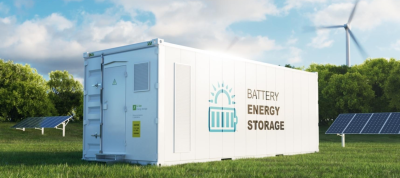
India’s power sector has travelled a long distance from chronic shortages and high costs to an era of abundance. With nearly 40 GW of renewable capacity being added annually, clean electricity in India is now among the cheapest in the world. The central challenge has shifted decisively — from building capacity to absorbing it. How India organises demand, markets, and institutions will determine whether this clean-energy momentum accelerates or stalls.
From scarcity to surplus in the power sector
For decades, power-sector reform in India focused on overcoming scarcity and improving affordability. That phase is largely over. Today, the constraint is absorption. Around 42 GW of renewable capacity already awarded through auctions is still waiting for buyer utilities.
State distribution companies are cautious about signing additional long-term power purchase agreements, driven by concerns over finances, demand uncertainty, and grid integration. If the buyer base does not expand, renewable deployment risks slowing despite falling costs.
Why clean power is now fundamentally different
Two structural shifts have transformed the economics of clean energy.
First, prices have collapsed. Recent reverse auctions for solar power paired with storage have closed at around ₹3 per unit, with prices fixed in nominal terms for 12–25 years. These projects can deliver near round-the-clock electricity at costs comparable to conventional power.
Second, institutional reforms have widened access. Open access and captive procurement frameworks allow large industrial and commercial consumers to buy power from anywhere in the country by paying network charges. Nearly a quarter of India’s renewable additions are now driven by such buyers, easing pressure on utilities and creating a parallel demand channel.
Industrial demand as the first anchor
Manufacturing clusters, export-oriented industries, and data centres are well placed to absorb large volumes of clean electricity. Through open access or captive routes, they can secure long-term price certainty while meeting sustainability requirements.
This has strategic trade implications. Clean-powered manufacturing offers Indian exports an edge under carbon border measures such as the EU’s CBAM. Such clusters can attract foreign direct investment and green finance, reinforcing a virtuous cycle of industrial growth and clean-power deployment.
Electrifying industrial heat and core sectors
Nearly half of India’s industrial energy demand goes into process heat, much of it currently met through imported oil and gas. Electric heat pumps and high-temperature heat batteries now allow this demand to shift towards clean electricity.
Fertilisers and steel are particularly important. Fertiliser production depends heavily on imported natural gas, while steel relies on coking coal. Recent green ammonia auctions indicate that fertiliser production using clean electricity is already competitive. As costs continue to fall, green steel could follow a similar trajectory, anchoring large-scale clean-power demand.
Transport electrification as a demand stabiliser
Electrifying buses, commercial fleets, and freight corridors can create a large, flexible demand base for domestic clean power. When charging schedules are aligned with daytime solar generation, electricity demand rises precisely when clean power is most abundant.
This flexibility improves grid stability while reducing oil imports and urban pollution. Over time, transport electrification can become one of the most reliable sinks for incremental renewable capacity.
Distributed solar and the utility transition
Rooftop solar across commercial buildings, MSMEs, and households plays a complementary role. It lowers consumer bills and improves resilience. For utilities, it reduces peak demand, transmission losses, and subsidy burdens.
As demand shifts, utilities can evolve from energy sellers into grid managers and reliability providers — a transition already visible in advanced power systems globally.
Finance, manufacturing, and strategic autonomy
Large buyers could move faster if long-term clean-energy contracts were aggregated and securitised through dedicated finance platforms. Smaller consumers will require fintech solutions connected to India Stack to reduce transaction costs and friction.
Expanding domestic demand for clean electricity is also the most effective way to absorb India’s solar manufacturing capacity. While batteries remain import-dependent, India’s experience with solar manufacturing shows that scale and policy certainty can rapidly reduce such dependencies. Strategic partnerships with allied economies can further secure access to critical minerals.
Why demand now defines the energy transition
Robust domestic demand has always been India’s economic strength. It can now power the energy transition as well. India’s cheapest electricity has already arrived; the harder task is building the markets, institutions, and end-use pathways that can absorb it.
How effectively India aligns industrial policy, power markets, and clean-energy demand will shape not just its climate trajectory, but its journey towards Viksit Bharat.
What to note for Prelims?
- Open access and captive power procurement
- Solar-plus-storage reverse auctions
- Green ammonia and green steel
- Distributed rooftop solar
What to note for Mains?
- Shift from power scarcity to demand absorption
- Role of industry in clean-energy transition
- Link between trade, carbon borders, and clean power
- Institutional reforms in India’s electricity sector