
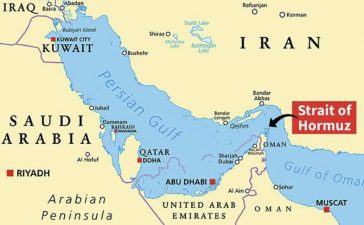
Recent tensions in the Gulf region have heightened concerns over the Strait of Hormuz, a vital oil transit route. Iran’s Islamic Revolutionary Guards Corps (IRGC) sent warnings of closure, causing many vessels to suspend shipments. Though no official closure was declared, the disruption has already impacted global oil and gas flows. India, heavily reliant on this route for energy imports, faces challenges but has options to manage short-term shocks.
Importance of the Strait of Hormuz
The Strait of Hormuz is a narrow waterway between Iran and Oman. It connects the Persian Gulf with the Arabian Sea. About 15 million barrels of crude oil pass through daily. This is roughly one-fifth of the world’s liquid petroleum consumption. It also handles share of global LNG trade. Closure or disruption here threatens global energy security and raises oil prices.
Impact on India’s Energy Imports
India imports over 88% of its crude oil and depends heavily on the Strait of Hormuz. Around half of India’s oil—about 2.5 to 2.7 million barrels per day—comes through this route. Gas imports, including LPG and LNG, are even more dependent on the strait. LPG imports cover 80-85% of India’s demand and mostly transit Hormuz. India’s lack of strategic LPG reserves adds to vulnerability. India has crude oil reserves for about 10 days and fuel stocks for one week to manage short-term disruptions.
India’s Mitigation Strategies
India can draw from strategic petroleum reserves to cover shortfalls. It can increase spot purchases from other regions like Russia, the US, West Africa, and Latin America. Indian refiners have flexibility to switch suppliers quickly. Russian crude is available in nearby waters due to reduced intake earlier. However, LPG and LNG supply remain more sensitive due to limited alternative stocks and thinner global market availability.
Global Price and Conflict Outlook
Oil prices surged above 72 per barrel amid conflict fears, highest since mid-2025. Prolonged disruption could push prices beyond100 per barrel. Iran has threatened closure before but never executed it, as Gulf producers depend on uninterrupted exports. The ongoing conflict between Iran, the US, and Israel keeps the situation volatile with a risk of further escalation.
Topics for Prelims:
Strait of Hormuz
- Connects Persian Gulf to Arabian Sea via Iran and Oman.
- Handles 15 million barrels of crude oil daily.
- One-fifth of global liquid petroleum passes here.
- Critical chokepoint for global LNG trade.
- Closure impacts global energy prices and supplies.
India’s Energy Imports
- Over 88% of crude oil is imported.
- Half of oil imports pass through Hormuz.
- LPG imports cover 80-85% of domestic demand.
- Limited strategic reserves for LPG and LNG.
- Alternative suppliers include Russia, US, West Africa.
Geopolitical Conflict in Gulf
- Iran, US, and Israel involved in escalating tensions.
- IRGC warned vessels of strait closure in 2026.
- Disruption causes suspension of tanker shipments.
- Conflict raises oil price volatility and supply risk.
- Gulf countries depend on Hormuz for energy exports.
Questions for Mains:
- Critically analyse the strategic importance of the Strait of Hormuz for global energy security and its implications for India. [GS-III-Economic Development]
- With suitable examples, estimate the impact of geopolitical conflicts on international oil prices and supply chains. [GS-III-Economic Development]
- Point out the challenges faced by India in securing energy imports amid regional instability and how diversification of suppliers can mitigate these risks. [GS-III-Economic Development]
- Underline the role of strategic petroleum reserves in India’s energy security framework and critically analyse their limitations in the context of LPG and LNG supply disruptions. [GS-III-Economic Development]
Answer Hints:
1. Critically analyse the strategic importance of the Strait of Hormuz for global energy security and its implications for India. [GS-III-Economic Development]
- Strait of Hormuz connects Persian Gulf with Arabian Sea, a narrow chokepoint between Iran and Oman.
- Handles about 15 million barrels of crude oil daily, roughly one-fifth of global liquid petroleum consumption.
- Also critical for global LNG trade, making it vital for energy supplies worldwide.
- Closure or disruption leads to immediate global energy supply risk and price volatility.
- India imports over 88% of crude oil; around half (2.5-2.7 million bpd) passes through Hormuz from Gulf countries.
- Disruption threatens India’s energy security, increasing import costs and supply uncertainty.
2. With suitable examples, estimate the impact of geopolitical conflicts on international oil prices and supply chains. [GS-III-Economic Development]
- Conflicts like Iran-US-Israel tensions escalate risks of supply disruptions in Hormuz, a key oil transit route.
- Example – IRGC warnings of strait closure in 2026 caused tanker suspensions and halted shipments.
- Uncertainty drives oil prices up (e.g., Brent crude rose above 72/barrel, highest since mid-2025).</li> <li>Prolonged conflict could push prices above100/barrel due to supply constraints and war premium.
- Supply chains disrupted as insurers, traders avoid risky routes, causing shipping delays and rerouting.
- Global markets react with volatility, impacting energy-importing countries like India.
3. Point out the challenges faced by India in securing energy imports amid regional instability and how diversification of suppliers can mitigate these risks. [GS-III-Economic Development]
- Heavy dependence on Strait of Hormuz for oil (50%) and higher for LPG (80-85%) and LNG imports.
- Limited strategic reserves for LPG and LNG increase vulnerability to supply shocks.
- Regional conflicts risk disruption, causing potential shortfalls and price hikes.
- India’s crude oil reserves cover about 10 days; fuel stocks last about a week only.
- Diversification options – sourcing from Russia, US, West Africa, Latin America reduces dependence on Gulf.
- Flexibility of Indian refiners to switch suppliers quickly and spot procurements help mitigate short-term shocks.
4. Underline the role of strategic petroleum reserves in India’s energy security framework and critically analyse their limitations in the context of LPG and LNG supply disruptions. [GS-III-Economic Development]
- Strategic petroleum reserves (SPR) provide buffer stocks to manage crude oil supply disruptions (approx. 10 days’ coverage).
- SPR helps stabilize supply and prices during short-term crises, ensuring energy security.
- India lacks comparable strategic reserves for LPG and LNG, making these supplies more vulnerable.
- LPG and LNG spot market availability is thin, limiting options during prolonged disruptions.
- Limited structural buffers for gas imports increase logistical and price risks amid Hormuz instability.
- SPR alone cannot fully mitigate risks for LPG and LNG; diversification and infrastructure improvements needed.