
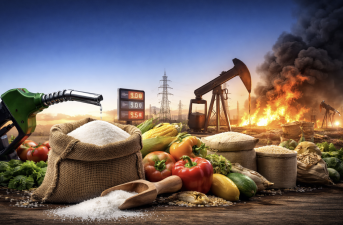
The rising conflict around the Strait of Hormuz in 2026 has triggered an energy crisis. This has caused a surge in oil prices and disrupted global shipping routes. The effects are spreading beyond energy to food and commodity markets, with sugar supply chains among the first to feel the pressure. Policymakers and industries worldwide are grappling with rising costs and supply challenges.
Energy Disruptions and Oil Market Volatility
The Strait of Hormuz is a vital passage for about 25% of global seaborne oil trade. Conflict has blocked this route, forcing ships to take longer paths like around the Cape of Good Hope. Oil prices surged to nearly $120 per barrel before easing slightly. The International Energy Agency (IEA) is considering the largest-ever coordinated release of strategic reserves to calm markets. Despite this, oil prices remain 17-20% higher than before the crisis. Asia, which depends heavily on this route, faces acute supply shortages and rising fuel costs.
Impact on Sugar and Food Supply Chains
Sugar shipments from Brazil, Central America, and Europe are delayed and more expensive due to disrupted maritime routes. Higher oil prices increase freight and refining costs, pushing sugar prices up. In Brazil, higher fuel prices make ethanol production more profitable, diverting sugarcane from sugar to biofuel and tightening global sugar supply. These changes ripple across food markets, increasing costs globally, especially in developing nations with limited fiscal space.
Wider Economic and Social Effects
The conflict is raising freight rates, insurance premiums, and fuel costs worldwide. This inflationary pressure hits food, transport, and manufacturing sectors. Many developing countries face intensified cost-of-living challenges. India, heavily reliant on LPG imports through the strait, is experiencing shortages affecting restaurants and hospitality. The government is increasing domestic LPG production and seeking alternative import sources. Diplomatic efforts by G7 and other nations aim to stabilise energy markets and prevent further escalation.
Geopolitical and Market Responses
The crisis has led to production cuts in Iraq and Kuwait due to storage limits and infrastructure damage. Restarting oil fields may take weeks or months. Export restrictions are rising in countries like China and Thailand. The IEA’s potential reserve release could provide short-term relief. However, long-term recovery depends on reopening the Strait of Hormuz and repairing production capacity. The situation remains fragile, with risks of inflation and supply chain disruptions continuing globally.
Topics for Prelims:
Strait of Hormuz
- Connects Persian Gulf to global markets
- Handles 25% of global seaborne oil trade
- Key route for LNG, fertilisers, petrochemicals
- Conflict caused maritime blockades in 2026
- Disruptions raise freight, insurance, fuel costs
Sugar Supply Chains
- Major suppliers – Brazil, Central America, Europe
- Shipping rerouted around Cape of Good Hope
- Higher oil prices increase freight and refining costs
- Biofuel demand in Brazil diverts sugarcane to ethanol
- Global sugar supply tightens, prices rise
International Energy Agency (IEA)
- Coordinates global oil reserve releases
- Holds 1.2 billion barrels of emergency reserves
- Considering largest-ever reserve release in 2026
- Aims to stabilise volatile oil markets
- Member of 30 countries collaborating on energy security
Questions for Mains:
- Critically analyse the impact of geopolitical conflicts on global energy security and their cascading effects on food supply chains with suitable examples. [GS-III-Economic Development]
- Point out the challenges faced by developing countries in managing energy and food inflation during global supply disruptions and suggest policy measures. [GS-II-Governance]
- Estimate the role of strategic petroleum reserves in stabilising oil markets during crises and evaluate their limitations in the context of the 2026 Strait of Hormuz conflict. [GS-III-Internal & External Security]
- Underline the significance of maritime chokepoints like the Strait of Hormuz in global trade and critically analyse the implications of their disruption on international relations and economic stability. [GS-II-International Relations]
Answer Hints:
1. Critically analyse the impact of geopolitical conflicts on global energy security and their cascading effects on food supply chains with suitable examples. [GS-III-Economic Development]
- Geopolitical conflicts (e.g., Strait of Hormuz 2026) disrupt critical energy supply routes, causing global oil price volatility and supply shortages.
- Strait of Hormuz handles ~25% of global seaborne oil; blockade forces rerouting, increasing freight costs and delivery times.
- Rising oil prices increase costs for agricultural inputs, freight, and refining, impacting food supply chains (e.g., sugar shipments delayed and costlier).
- Biofuel economics shift (Brazil ethanol production favored), diverting sugarcane from sugar to fuel, tightening sugar supply and raising prices globally.
- Ripple effects extend to food inflation, transport, and manufacturing sectors, especially in vulnerable developing economies.
- Examples – Iraq and Kuwait production cuts; LPG shortages in India affecting hospitality; export restrictions in Asia intensify supply pressures.
2. Point out the challenges faced by developing countries in managing energy and food inflation during global supply disruptions and suggest policy measures. [GS-II-Governance]
- Developing countries have limited fiscal space and high debt, constraining ability to subsidize rising energy and food costs.
- Dependence on imports (e.g., India’s 62% LPG imports via Strait of Hormuz) makes them vulnerable to supply shocks and price spikes.
- Inflationary pressures from rising freight, insurance, and fuel costs exacerbate cost-of-living challenges, especially for the poor.
- Policy measures – increase domestic production (India raising LPG output by 25%), diversify import sources (Algeria, Australia, Canada, Norway), and manage allocation transparently.
- Extend booking intervals, prioritize essential consumers, and enhance strategic reserves to buffer short-term shocks.
- Strengthen diplomatic engagement for stable energy flows and invest in renewable/alternative energy to reduce import dependence.
3. Estimate the role of strategic petroleum reserves in stabilising oil markets during crises and evaluate their limitations in the context of the 2026 Strait of Hormuz conflict. [GS-III-Internal & External Security]
- Strategic petroleum reserves (SPR) act as emergency buffers to release oil, stabilizing prices and supply during crises.
- IEA holds ~1.2 billion barrels of emergency reserves; considering largest-ever coordinated release in 2026 to calm market volatility.
- SPR release can temporarily reduce price spikes and supply shortages, providing market confidence and buying time for resolution.
- Limitations – reserves are finite, do not solve underlying supply disruption, and may only delay price pressures if blockade persists.
- In 2026 conflict, storage constraints and infrastructure damage limit production recovery; SPR cannot compensate for prolonged supply cuts.
- Long-term stabilization depends on reopening chokepoints, repairing infrastructure, and restoring production capacity beyond SPR use.
4. Underline the significance of maritime chokepoints like the Strait of Hormuz in global trade and critically analyse the implications of their disruption on international relations and economic stability. [GS-II-International Relations]
- Maritime chokepoints (Strait of Hormuz, Suez Canal) are vital narrow passages facilitating ~25% of global seaborne oil and key commodities transit.
- Disruption forces longer, costlier rerouting (e.g., Cape of Good Hope), raising freight, insurance, and fuel costs, impacting global supply chains.
- Economic implications include inflationary pressures on energy, food, and manufacturing sectors worldwide, especially in import-dependent countries.
- Disruptions heighten geopolitical tensions, trigger diplomatic interventions (e.g., G7 coordination), and risk military escalations affecting global peace.
- Countries may impose export restrictions, reduce cooperation, and seek alternative alliances, altering global trade dynamics and energy security frameworks.
- Ensuring security of chokepoints is crucial for economic stability, requiring multilateral diplomacy, naval security, and diversified trade routes.