
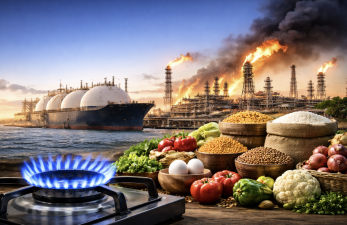
India’s 2026 Natural Gas (Supply Regulation) Order responded to Gulf energy disruptions. The order rationed natural gas amid supply cuts caused by conflict in the Strait of Hormuz. This route is vital for India’s energy imports. The government prioritised household, vehicle, and LPG production gas supplies. However, many low-cost eateries serving migrant workers face severe gas cuts. This threatens food access and livelihoods in urban India.
Background of Gas Supply Regulation
India imports over 85% of its crude oil and much LNG via Gulf routes. Conflict in the Strait of Hormuz disrupted shipments. On March 10, the government invoked the Essential Commodities Act. The order ensured full supply to households (PNG), vehicles (CNG), and LPG production. Industrial sectors faced cuts – refineries and power at 80%, petrochemicals and fertilisers at 70%, and other industries at 65%. Low-cost food service providers were grouped with industries, facing a 35% cut.
Impact on Migrant Workers and Food Vendors
India has about 100 million migrant workers in cities. Many rely on affordable eateries for daily meals. These include dhabas, roadside stalls, and community kitchens. The gas cut affects cooking fuel availability and raises food costs. Street vendors report closures due to fuel shortages and inability to raise prices. The Indian Hawkers Alliance noted around 1,000 of 10,000 vendors have shut down. This threatens food security for vulnerable urban populations.
Policy Gaps and Expert Recommendations
Experts show the gap in protecting food access in the order. They urge reclassification of affordable food services as essential infrastructure. A minimum 85% gas supply is recommended for these services. Experts suggest activating PDS-supported community kitchens in cities with large migrant populations. Funding should come from the central government, with state governments implementing schemes within seven days. This aims to prevent a crisis similar to the 2020 COVID-19 migrant food emergency.
Local Responses and Challenges
Migrant workers face barriers to LPG access due to documentation and KYC rules. Some cities, like Bhubaneswar, temporarily allowed coal and firewood for cooking despite pollution concerns. This indicates rising anxiety over fuel shortages. Local emergency measures show the urgency of addressing fuel and food security for low-income urban residents.
Topics for Prelims:
Natural Gas Supply Regulation
- India imports 85%+ crude oil mainly via Gulf routes.
- Strait of Hormuz is a key global petroleum route.
- Essential Commodities Act used to regulate gas supply.
- Households and LPG production get full gas supply.
- Industrial and commercial sectors face 20-35% gas cuts.
Migrant Workers and Food Security
- About 100 million migrant workers live in Indian cities.
- Most depend on affordable eateries for daily meals.
- Gas cuts threaten food availability and increase costs.
- Many street vendors have shut down due to fuel shortages.
- Access to LPG is limited by KYC and address proof rules.
Policy and Local Responses
- Experts call for reclassifying affordable food services as essential.
- Community kitchens like Amma and Indira Canteens suggested.
- Central funding and state implementation urged within 7 days.
- Some cities allow temporary use of coal/firewood for cooking.
- Fuel shortage seen as a threat to urban food security.
Questions for Mains:
- Discuss in the light of India’s energy security challenges how disruptions in global supply chains affect domestic food security. [GS-III-Economic Development]
- Critically examine the role of Essential Commodities Act in managing natural resource crises and its impact on vulnerable populations in India. [GS-II-Governance]
- Explain the socio-economic challenges faced by migrant workers in urban India, and discuss policy measures to improve their food and fuel security. [GS-I-Indian Society]
- With suitable examples, discuss the environmental and public health implications of temporary fuel substitutions such as coal and firewood use in urban areas. [GS-III-Environment & DM]
Answer Hints:
1. Discuss in the light of India’s energy security challenges how disruptions in global supply chains affect domestic food security. [GS-III-Economic Development]
- India imports over 85% of crude oil and LNG via Gulf routes, especially through the Strait of Hormuz, a critical global petroleum corridor.
- Conflict and attacks in the Gulf disrupt shipping, causing supply shortages and rationing of natural gas domestically.
- Essential sectors like households and LPG production get priority, while industrial and commercial users face gas cuts.
- Low-cost food service providers (dhabas, street vendors) face fuel shortages, affecting cooking fuel availability and increasing food prices.
- Migrant workers dependent on affordable eateries face food insecurity due to reduced gas supply and vendor shutdowns.
- Thus, global energy supply disruptions cascade into domestic food security crises, denoting interlinked vulnerabilities in supply chains.
2. Critically examine the role of Essential Commodities Act in managing natural resource crises and its impact on vulnerable populations in India. [GS-II-Governance]
- The Essential Commodities Act (ECA) empowers government to regulate supply and distribution of critical resources during crises.
- In 2026, ECA was invoked to ration natural gas amid Gulf supply disruptions, prioritizing households, vehicles, and LPG production.
- Industrial and commercial sectors, including affordable food vendors, faced severe supply cuts under ECA orders.
- This broad categorization overlooked vulnerable groups like migrant workers dependent on low-cost food services, worsening food insecurity.
- Experts argue for reclassification of affordable food services as essential, to protect food security under ECA provisions.
- Thus, while ECA aids resource management, its blanket application can unintentionally harm marginalized populations without targeted safeguards.
3. Explain the socio-economic challenges faced by migrant workers in urban India, and discuss policy measures to improve their food and fuel security. [GS-I-Indian Society]
- India has about 100 million migrant workers in cities, many lacking permanent addresses or local IDs, limiting access to LPG connections due to KYC norms.
- Most rely on affordable eateries, roadside dhabas, and community kitchens for daily meals, lacking home cooking facilities.
- Natural gas supply cuts and fuel shortages raise food costs, cause vendor shutdowns, and threaten migrant food security.
- Experts recommend reclassifying affordable food services as essential infrastructure with guaranteed minimum gas supply (85%).
- Activation of PDS-supported community kitchens (e.g., Amma and Indira Canteens) funded by central and implemented by state governments is urged.
- Local emergency responses include temporary allowances for coal/firewood use, indicating urgent need for inclusive fuel and food security policies.
4. With suitable examples, discuss the environmental and public health implications of temporary fuel substitutions such as coal and firewood use in urban areas. [GS-III-Environment & DM]
- Temporary use of coal and firewood for cooking (e.g., Bhubaneswar Municipal Corporation’s relaxation) is a response to LPG and gas shortages.
- Coal and firewood combustion emit particulate matter (PM2.5), carbon monoxide, and other pollutants, worsening urban air quality.
- Increased indoor air pollution from these fuels leads to respiratory diseases, eye irritation, and long-term health hazards, especially in dense urban settlements.
- Use of solid fuels contradicts pollution control efforts and can exacerbate smog and environmental degradation.
- Such substitutions show trade-offs between immediate fuel access and environmental/public health risks.
- Policy measures must balance emergency fuel needs with cleaner alternatives and mitigation strategies to reduce health impacts.