
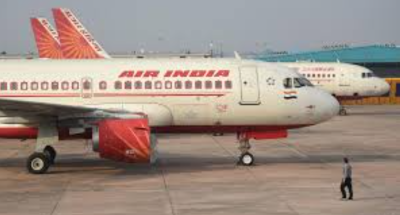
India’s third round of airport privatisation has reached a critical stage as of April 2026. The Ministry of Civil Aviation (MoCA) has formalised its proposal to lease 11 Airports Authority of India (AAI) facilities, seeking in-principle clearance from the Public Private Partnership Appraisal Committee (PPPAC).
The Strategic Bundling Framework
In a strategic shift to ensure the viability of smaller facilities, the government is grouping the 11 airports into five bundles. Each bundle pairs a higher-traffic airport with one or more smaller, less commercially attractive facilities to encourage “cross-subsidisation”.
| Bundle | Primary Airport(s) | Paired Smaller Airport(s) |
| Bundle 1 | Amritsar | Kangra |
| Bundle 2 | Varanasi | Kushinagar & Gaya |
| Bundle 3 | Bhubaneswar | Hubli |
| Bundle 4 | Raipur | Aurangabad |
| Bundle 5 | Tiruchirappalli (Trichy) | Tirupati |
Regulatory and Market Developments
Anti-Monopoly Measures and Caps
To address concerns over market concentration—particularly after the Adani Group won all six airports in the 2019 round—the government is considering capping the number of bundles a single entity can win. Reports suggest a limit of two bundles (four airports) per bidder to maintain a competitive landscape.
Monetisation and Fiscal Targets
This round is a core component of the Asset Monetisation Plan (2025–30). The initiative aims to raise approximately ₹6,000 crore in the 2026–27 fiscal year alone, contributing to the broader national infrastructure funding pool.
The Per-Passenger Fee Revenue Model
The bidding will likely follow the per-passenger fee model, where private operators pay a fixed fee to AAI for every passenger. This replaces the older percentage-of-total-revenue model, aiming for greater financial transparency and predictability for the government.
Key Sectoral Concerns
- Passenger Costs: While privatisation aims to improve amenities, there are significant worries regarding increased User Development Fees (UDF) that could impact ticket affordability for the common traveler.
- Market Concentration: The dominance of a few large players like GMR Airports and the Adani Group has led to calls for more stringent safeguards to prevent regional monopolies.
Core Objectives of Privatisation
The government’s strategy is driven by the National Monetisation Pipeline (NMP), treating airports as mature assets capable of funding their own expansion through private capital.
Asset Monetisation and Reinvestment
The immediate goal is to unlock the value of “brownfield” (existing) assets. By leasing these airports, the AAI generates significant upfront cash and steady annual cash flows. This capital is then ring-fenced to fund the development of airports in remote and unserved regions (tier-2 and tier-3 cities).
Operational Efficiency and Modernisation
Private operators are expected to bring in global expertise to upgrade terminal infrastructure, introduce advanced technology (like biometric boarding), and improve passenger amenities to resolve capacity constraints.
Expanding Aviation Capacity
With India targeting a capacity of 850 million passengers in the next five years, the private sector’s ability to execute large capital expansion projects quickly is seen as essential.
The Functionality of the PPP Model
The Public-Private Partnership (PPP) model operates as a long-term lease (typically 50 years). The government (via AAI) retains ownership of the land and assets, while the private partner manages Operations, Management, and Development.
The Financial Mechanism: Per-Passenger Fee (PPF)
- Mechanics: Bidders quote a fixed fee they are willing to pay AAI for every domestic and international passenger handled. The bidder offering the highest fee wins.
- Rationale: This model reduces disputes over “creative accounting” and guarantees AAI a predictable income stream that grows directly with passenger traffic.
Practical Impact of Bundling on Viability
Bundling pairing high-traffic “hubs” with smaller “spokes” is a strategic maneuver to balance the uneven commercial landscape.
Financial Viability through Cross-Subsidisation
- Underwriting Risk: Private operators use the robust cash flows and high non-aeronautical revenues (retail, dining, parking) from major hubs to fund infrastructure upgrades at paired smaller facilities.
- Bankability: Bundling makes “unattractive” airports bankable, ensuring even remote regional airports attract private investment.
Operational Efficiency and Network Optimization
- Economies of Scale: Operators can centralise management functions—such as procurement, maintenance, and HR—across the bundle.
- Strategic Traffic Management: A single operator can align flight schedules and landing fees between paired airports to maximize traffic density.
- Technology Integration: Bundled concessions mandate the adoption of “Industry 4.0” standards, ensuring smaller airports do not suffer from a digital divide.
| Challenge | Impact on Efficiency/Viability |
| Market Concentration | Large players dominating bundles can reduce future competitive bidding tension. |
| Regulatory Oversight | AERA must ensure hub revenues are actually reinvested in the spokes. |
| Rising Passenger Costs | Operators may raise UDF at hubs to cover regional airport operational costs. |
Global Comparison of Privatisation Models
India’s approach is a hybrid lease model that balances state ownership with private operations, differing from the full divestiture models seen in Europe.
| Feature | India’s Model (Current) | European Model (e.g., UK) | US Model |
| Ownership | State-Owned, Privately Leased | Divestiture/IPO | Public Authority |
| Revenue Model | Per-Passenger Fee (PPF) | Revenue Share/Commercial | Grants & Bonds |
| Regulation | Hybrid-Till (70/30): Only 30% of non-aero profit subsidises aero charges. | Single/Dual-Till: Varies; often uses Single-Till to offset charges. | Non-Profit Mandate: Revenue must be reinvested back into the airport. |
India has avoided the Full Divestiture model, preferring the Concession Model used in Latin America and Southeast Asia, allowing the government to reclaim assets after 50 years.
Benefits and Risks for Stakeholders
Potential Benefits
- Service Quality: Introduction of advanced technologies like biometric boarding (Digi Yatra) and “Net Zero” sustainability initiatives.
- Infrastructure Investment: Leasing brownfield assets allows reinvestment into the UDAN scheme for regional connectivity.
Potential Risks
- Rising Costs: Strong correlation between privatisation and higher UDF. Domestic UDF at Thiruvananthapuram increased from ₹506 to ₹770 post-privatisation.
- Monopolistic Power: The concentration of power in groups like Adani, which operates eight major airports, can weaken airline bargaining power.
- Transparency Issues: AERA has flagged cases of under-reported non-aeronautical revenue intended to lower passenger costs.
Evolution of Regulatory Frameworks
Structural Safeguards
- Bid Caps: New policies limit the number of airports a single bidder can win to prevent monopolistic dominance.
- Bundling Requirements: Forcing investment in “public good” connectivity as a prerequisite for accessing lucrative markets.
Service-Linked Accountability
The Airports Economic Regulatory Authority (AERA) is moving toward linking income to performance through Service-Linked Tariffs. If an operator fails to meet quality benchmarks (e.g., security wait times), the regulator can mandate a reduction in airport tariffs.
Operational Transparency
The integration of Digital-First standards provides the regulator with irrefutable automated metrics on passenger processing times, reducing reliance on self-reported data.
| Feature | Old Model (Pre-2026) | New Evolved Framework (2026+) |
| Market Structure | Uncapped bidding | Bid Caps (Max 2 bundles) |
| Performance Goal | Capital Investment | Service Quality & Connectivity |
| Accountability | Periodic Review | Service-Linked Tariffs |
Questions
- Critically analyse the socio-economic impact of the ‘Bundling Strategy’ in the third round of airport privatisation. How does the cross-subsidisation model address the regional disparity in Indian aviation infrastructure? {GS-III: Economic Development}
- Examine the evolution of the ‘Per-Passenger Fee’ (PPF) model as a tool for ensuring fiscal transparency. In what ways does this model mitigate the risks of ‘creative accounting’ compared to previous revenue-sharing agreements? {GS-II: Governance}
- What are the regulatory challenges in preventing ‘gold-plating’ of capital costs by private airport operators? Discuss in the light of the powers vested in the Airports Economic Regulatory Authority (AERA). {GS-II: Governance}
- With suitable examples, discuss how the concentration of strategic infrastructure in the hands of a few private conglomerates impacts market competition. What measures can the State adopt to ensure a level playing field? {GS-III: Economic Development}
- Analyse the implications of ‘Service-Linked Tariffs’ on the operational efficiency of privatised airports. To what extent can financial penalties ensure public accountability in a Public-Private Partnership (PPP) framework? {GS-II: Governance}
- Taking example of the global ‘Hybrid-Till’ versus ‘Single-Till’ regulatory mechanisms, estimate the impact of India’s current regulatory choice on ticket affordability for the end-user. {GS-III: Economic Development}