
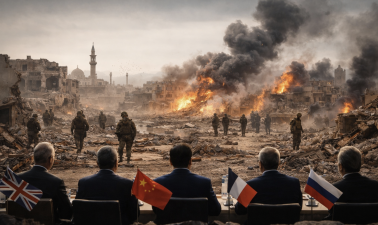
The West Asia conflict has intensified in 2026, with recent killings of Iran’s security chief Ali Larijani and paramilitary commander Gholamreza Soleimani. Over 1,300 lives have been lost. Energy prices surged and global security faces serious threats. Despite this, the global response is weak due to leadership paralysis and strategic caution. European nations and Global South leaders hesitate to act, fearing fallout with the US under President Donald Trump. This deadlock raises questions about who will lead efforts to restore peace.
Current Conflict and Its Impact
The conflict involves Iran and allied forces against US-Israel actions. Casualties exceed 1,300. Energy markets are destabilised, raising global prices. Security risks have escalated worldwide. The war’s continuation threatens regional and international stability. No side shows readiness for decisive intervention.
Global Leadership and Strategic Ambivalence
Europe avoids direct involvement to preserve ties with the US. EU leaders feel sidelined by Washington’s unilateral moves. NATO members refused military deployment in the Strait of Hormuz. Europe criticises Iran but refrains from condemning the US. BRICS countries remain silent or issue vague calls for dialogue. Both Europe and BRICS fear antagonising the US or entering a costly conflict.
Role and Expectations from BRICS and Europe
BRICS, representing the Global South, is expected to counter Western dominance. However, its response is limited to calls for ceasefire without naming culprits. Members have diverse interests, including alliances with the US. India, as BRICS chair, faces pressure to unify members. Europe’s dependence on the US limits its independent action. The combined economic and diplomatic power of BRICS could deter escalation if coordinated.
Challenges in Collective Action
States fear punitive US measures and uncertain support from allies. Middle powers expect stronger nations to lead. Powerful states fear entrapment and lack trust in middle powers. This results in a leadership vacuum. The world risks sliding into disorder without collective responsibility. Strategic restraint dominates over proactive peace efforts.
Topics for Prelims:
West Asia Conflict
- Conflict involves Iran, US, Israel, and regional actors.
- Over 1,300 casualties reported in 2026 escalation.
- Energy prices surged due to instability in the Strait of Hormuz.
- Global security risks increased from regional conflict.
- Recent killings of key Iranian leaders intensified tensions.
BRICS and Global Diplomacy
- BRICS includes Brazil, Russia, China, South Africa.
- Focuses on countering Western hegemony.
- Calls for sovereignty and non-interference in conflicts.
- Has economic and diplomatic influence globally.
- Currently showing limited response to West Asia conflict.
European Union and US Relations
- EU depends on US for security and diplomacy.
- NATO members refused military deployment in strategic waters.
- EU criticised Iran but avoided blaming the US.
- EU foreign policy chief expressed displeasure over US unilateralism.
- Europe reluctant to disrupt alliance with Washington.
Questions for Mains:
- Discuss the role of BRICS in maintaining global order in light of the West Asia conflict. [GS-II-International Relations]
- Critically examine the impact of strategic restraint by middle powers on international conflict resolution. [GS-II-International Relations]
- Explain the challenges faced by the European Union in balancing its alliance with the US and its own foreign policy objectives. With suitable examples, discuss the implications for global security. [GS-II-Constitution of India & Polity]
- Comment on the significance of collective leadership in global conflict management and analyse why such leadership is often absent in contemporary international relations. [GS-II-Governance]
Answer Hints:
1. Discuss the role of BRICS in maintaining global order in light of the West Asia conflict. [GS-II-International Relations]
- BRICS represents major Global South powers with economic and diplomatic influence.
- It advocates sovereignty, non-interference, and counters Western hegemony in global affairs.
- In the West Asia conflict, BRICS response has been limited to calls for ceasefire and dialogue without naming culprits.
- Diverse interests among members (e.g., UAE’s US alliance) hinder unified action.
- As chair, India is expected to mobilize BRICS to send a strong message and deter escalation.
- BRICS’ credibility risks erosion if it fails to act decisively in crises affecting global order.
2. Critically examine the impact of strategic restraint by middle powers on international conflict resolution. [GS-II-International Relations]
- Middle powers hesitate to lead due to fear of punitive measures from powerful states (e.g., US).
- They expect powerful countries to take initiative, creating leadership vacuum.
- Strategic restraint leads to paralysis and prolongs conflicts, as seen in West Asia crisis.
- Risk aversion undermines collective security and global governance mechanisms.
- Restraint limits proactive diplomacy, allowing conflicts to escalate unchecked.
- Such inaction weakens multilateral institutions and global order stability.
3. Explain the challenges faced by the European Union in balancing its alliance with the US and its own foreign policy objectives. With suitable examples, discuss the implications for global security. [GS-II-Constitution of India & Polity]
- EU depends on US for security (NATO) and diplomatic support, limiting independent action.
- EU leaders feel sidelined by US unilateralism; e.g., refusal to consult Europe on West Asia conflict.
- NATO members refused US calls to deploy militaries in Strait of Hormuz, showing reluctance.
- EU criticized Iran harshly but avoided blaming US, reflecting alliance constraints.
- Displeasure expressed by EU foreign policy chief Kaja Kallas marks intra-alliance tensions.
- Such balancing act causes strategic ambivalence, weakening coordinated global security responses.
4. Comment on the significance of collective leadership in global conflict management and analyse why such leadership is often absent in contemporary international relations. [GS-II-Governance]
- Collective leadership ensures shared responsibility, legitimacy, and effective conflict resolution.
- It pools resources and political will to manage crises and maintain global order.
- Absence often due to fear of entrapment, divergent national interests, and mistrust among states.
- Power asymmetries and fear of antagonizing dominant powers (e.g., US) inhibit initiative.
- Middle powers expect leadership from powerful states; powerful states fear uncertain support.
- Resulting paralysis risks disorder, prolongs conflicts, and undermines multilateralism.