
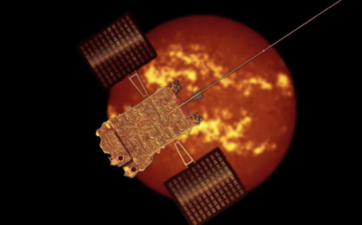
India’s Aditya-L1 solar observatory has provided new scientific vital information about how a major solar storm can disturb Earth’s magnetic environment. The study examined a powerful space weather event that struck Earth in October 2024 and found that the most severe effects occurred during the storm’s turbulent phase. The findings show the growing importance of monitoring solar activity to protect satellites, communication systems, navigation services and power infrastructure.
What the Study Found
The analysis showed that the turbulent region of the solar storm strongly compressed Earth’s magnetic field. This pushed the magnetosphere unusually close to Earth for a short period. As a result, some satellites in geostationary orbit were briefly exposed to harsher space conditions than usual.
Role of Aditya-L1
Aditya-L1, India’s first solar observatory, contributed key observations for the study. Scientists combined its data with inputs from other international space missions to decode the behaviour of the solar plasma eruption. The research was published in The Astrophysical Journal in December 2025 and involved ISRO scientists and research students.
Effects on Earth’s Upper Atmosphere
The study also found that currents in the auroral region at high latitudes became highly intensified during the turbulent phase. Such activity can heat the upper atmosphere and may increase atmospheric escape. This makes the event important for understanding how severe solar storms affect near-Earth space and atmospheric dynamics.
Why It Matters for Space Weather Monitoring
Space weather refers to conditions in space caused by solar activity such as plasma eruptions. These events can disrupt satellites, communication links, navigation systems and electrical grids. ISRO said the findings reinforce the need for real-time assessment of solar storms and stronger protection for critical space assets.
Last Modified: April 25, 2026