
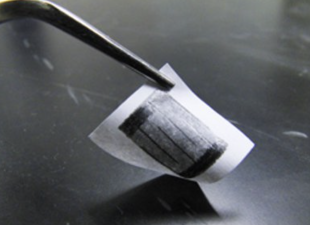
A research team at Gauhati University has developed a flexible, low-cost paper-based sensor using pencil-drawn graphite electrodes and graphene oxide. The device can measure humidity and moisture with high sensitivity and has been demonstrated for soil monitoring, plant stress detection, breath analysis, skin moisture tracking, proximity sensing, and smart diaper wetness detection. The work marks a simple and sustainable approach to sensor fabrication for agriculture and healthcare.
What the Sensor Is
The sensor is built on a paper substrate. Ordinary pencils are used to draw interdigitated electrodes directly on paper. Graphene oxide acts as the active sensing layer. This design removes the need for expensive metals such as gold or platinum, as well as cleanroom-based manufacturing.
Key Features
- The sensor is lightweight and mechanically flexible.
- It is inexpensive and suitable for disposable use.
- It avoids complex chemical-intensive fabrication steps.
- It shows very high humidity sensitivity, with a response exceeding 1500% at high relative humidity.
Applications Demonstrated
The same device has been tested in several practical settings. It can detect soil moisture for agriculture and monitor plant drought stress through transpiration analysis. It can also track human breathing patterns, skin moisture, and non-contact proximity. In addition, it can function as a smart diaper wetness detector.
Scientific and Practical Significance
The development shows that high-performance sensors can be made using simple, locally adaptable materials. Such devices may support large-area sensing in farms, homes, and healthcare settings. The research also points to a pathway for scalable sensor production without dependence on costly infrastructure.
Last Modified: April 25, 2026