
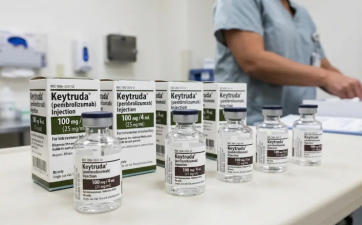
Keytruda, the brand name of pembrolizumab, is a leading immunotherapy drug used in the treatment of several cancers. Recent concern around counterfeit vials has brought into light the risks linked to high prices, limited access and weak oversight in cancer care supply chains. The issue is for India, where demand for advanced cancer medicines is rising rapidly.
What Keytruda Is
Keytruda is a checkpoint inhibitor and a monoclonal antibody. It works by blocking the PD-1 receptor on T cells, preventing cancer cells from switching off the immune response. This allows the body’s immune system to recognise and attack malignant cells more effectively. It is used for several cancers, including certain lung cancers, cervical cancer, renal cell cancer and aggressive breast cancer. It was first approved by the US FDA in 2014 for advanced skin cancer.
Role in Cancer Treatment
Keytruda is part of immunotherapy, which differs from chemotherapy and radiotherapy.
- Chemotherapy and radiotherapy directly kill cancer cells, but may also damage healthy cells.
- Immunotherapy helps the immune system identify and destroy cancer cells.
- It is often more targeted and may spare healthy tissue.
- In some late-stage cancers, it has produced major responses, including complete tumour disappearance in select patients.
Cost, Access and Availability in India
Keytruda is expensive because it is a complex biologic drug and remains protected by patent rights. In India, a 100 mg vial costs upwards of Rs 1.5 lakh. The standard dose is 200 mg every three weeks, making monthly treatment costs very high. Access is often through the company’s Patient Access Programme, hospital pharmacies, or some government health schemes. The drug is also available in tertiary care hospitals. India has also seen progress in other immunotherapies, including indigenous CAR-T therapy.
Counterfeit Risk and Market Concerns
Counterfeit Keytruda has become a serious concern because fake vials can closely resemble genuine packaging. This makes detection difficult even for trained staff.
- High prices create demand for illegal supply.
- Insider involvement and hospital-level breaches have been reported.
- Regulatory gaps weaken monitoring of distribution channels.
- Buying through hospital pharmacies or official access programmes remains the safest route.