
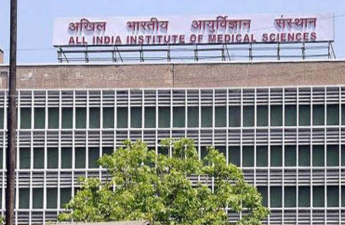
The Neurobiochemistry Laboratory at the Neurosciences Centre of the All India Institute of Medical Sciences (AIIMS), New Delhi, launched free Therapeutic Drug Monitoring (TDM) blood tests for advanced anti-epileptic drugs, specifically levetiracetam and lamotrigine, on 10 May 2026. This newly established facility provides specialized neurodiagnostic services to both outpatient department (OPD) and inpatient department (IPD) patients. The service is accessible at the main New Delhi campus as well as the Molecular Diagnostic Laboratory at the NCI-AIIMS Jhajjar campus. By measuring specific drug concentrations in the blood, the facility assists clinicians in optimizing dosage, ensuring precise seizure control, and minimizing adverse toxic side effects.
Understanding Therapeutic Drug Monitoring
Definition and Mechanism
Therapeutic Drug Monitoring is a branch of clinical chemistry that measures the exact concentration of a medication in a patient’s bloodstream at designated intervals. The primary objective is to maintain the drug levels within a narrow, predetermined therapeutic window. This window represents the concentration range where the drug is most effective without causing toxicity.
Clinical Utility in Epilepsy Management
Epilepsy is a chronic neurological disorder marked by recurrent, unprovoked seizures caused by abnormal electrical activity in the brain. Management relies heavily on Anti-Epileptic Drugs (AEDs) or Anti-Seizure Medications (ASMs). TDM helps doctors personalize treatment because identical doses of an AED can produce highly variable blood concentrations in different individuals due to age, body weight, genetic variations, metabolic rates, and co-medications.
Core Dimensions of TDM in Epilepsy Care
Key Indications for Monitoring
- Dose Optimization: Tailoring medication quantities to match the specific pharmacokinetic profile of an individual.
- Assessment of Treatment Compliance: Identifying whether breakthrough seizures are caused by a failure of the drug or because the patient skipped doses.
- Toxicity Avoidance: Determining if adverse symptoms like dizziness, ataxia, or cognitive slowing are linked to elevated drug levels.
- Managing Drug-Drug Interactions: Monitoring serum fluctuations when multiple AEDs are co-administered (polytherapy) or when generic substitutions occur.
- Special Physiological Status: Tracking changes during pregnancy, aging, or in patients with underlying renal and hepatic impairments where drug clearance rates alter.
Targeted Anti-Epileptic Drugs at AIIMS
The AIIMS facility has expanded its diagnostic menu to include both conventional and second-generation anti-epileptic drugs:
| Generation of AED | Specific Drugs Monitored | Pharmacokinetic Challenges |
| Second-Generation (New Facility) | Levetiracetam, Lamotrigine | High inter-individual variability; clearance affected heavily by age and drug interactions. |
| First-Generation (Existing Facility) | Phenobarbital, Carbamazepine, Valproic Acid, Phenytoin | High protein binding; hepatic enzyme induction; narrow safety margin. |
Pharmacokinetic Profiles of New Target Drugs
Levetiracetam
- Excretion Route: Primarily eliminated unchanged through the kidneys, making it sensitive to renal function.
- Variability: Children exhibit a 30% to 70% increase in clearance compared to adults, requiring higher weight-adjusted doses. Conversely, elderly patients show lower clearance rates.
- Drug Interactions: While it does not utilize the hepatic cytochrome P450 system, its half-life shortens when paired with enzyme-inducing AEDs.
Lamotrigine
- Metabolism: Metabolized in the liver via glucuronidation.
- Interactions with Valproic Acid: Valproic acid acts as an enzyme inhibitor, which significantly prolongs the half-life of lamotrigine and elevates toxicity risks.
- Interactions with Oral Contraceptives: Estrogen-containing pills increase lamotrigine clearance, risking breakthrough seizures.
Logistical and Financial Impact
Operational Framework at AIIMS
The testing process is designed to be minimally invasive and digitally integrated to streamline patient care:
- Sample Requirement: Requires a small blood sample of 1 to 3 mL collected in a plain serum vial with a yellow cap.
- Sample Submission: Outpatients drop samples at Collection Centre Counter No. 3 (Ground Floor, NSC), while admitted patients submit to Room No. 64 (Ground Floor, NSC).
- Digital Reports: Results are uploaded directly to the e-Hospital portal for healthcare practitioners and the Online Registration System (ORS) portal for patients.
Socio-Economic Relief
Specialized TDM tests in commercial private laboratories are expensive, costing between ₹6,000 and ₹10,000 per drug. AIIMS provides these tests free of cost initially, with plans to sustain them at highly subsidized rates later. This directly reduces out-of-pocket healthcare expenditures for economically weaker sections.
Advanced Epilepsy Care Ecosystem
The Neurosciences Centre at AIIMS also offers cutting-edge interventions for drug-resistant epilepsy cases, where traditional medications fail. This includes neuro-robotic surgeries and advanced molecular diagnostic testing, which benefited over 60 complex patients by December 2024.
IASPOINT Booster Facts for UPSC
- National Cancer Institute (NCI), Jhajjar: This is a specialty campus under AIIMS New Delhi located in Haryana, focusing primarily on cancer care and allied advanced molecular diagnostics.
- Drug-Resistant Epilepsy (DRE): Also known as refractory epilepsy, this condition is diagnosed when a patient fails to achieve seizure freedom despite trying two tolerated and appropriately chosen AED schedules.
- Cytochrome P450 (CYP450) Enzyme System: A critical family of enzymes located mainly in the liver that metabolizes classic AEDs like phenobarbital and phenytoin. Variations in these genes explain why different individuals metabolize drugs at different speeds.
- Therapeutic Index: The quantitative comparison between the blood concentration at which a drug becomes toxic and the concentration at which it is effective. First-generation AEDs possess a narrow therapeutic index, necessitating strict monitoring.