
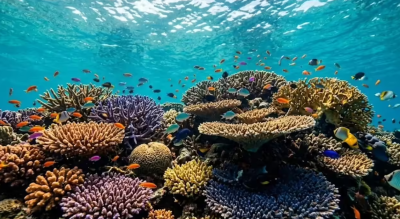
International marine research has revealed that coral reef ecosystems host highly diverse and largely unexplored microbial communities capable of producing novel bioactive compounds for medical applications. The complex collection of bacteria, fungi, viruses, and archaea living on and within corals—known as the coral microbiome—acts as a rich biochemical reservoir. These microorganisms generate unique secondary metabolites that exhibit potent antibacterial, anti-inflammatory, and anticancer properties. As global antimicrobial resistance challenges conventional medicine, bioprospecting these marine organisms provides critical new pathways for pharmaceutical development and advanced clinical therapeutics.
Biochemical Mechanics of the Coral Holobiont
The Holobiont Concept
A coral is not a single organism but a complex symbiotic entity termed a holobiont. This system includes the coral animal host, symbiotic photosynthetic algae (zooxanthellae), and a dense matrix of microscopic organisms dwelling within the coral mucus, tissue, and calcium carbonate skeleton.
Microbial Defense Mechanism
The bacteria associated with healthy corals produce specialized chemical compounds to defend the host against invading pathogens, biofouling, and environmental stress. This natural defense mechanism operates through two primary pathways:
- Competitive Exclusion: Beneficial microbes consume available space and nutrients, preventing pathogenic colonization.
- Antagonistic Chemical Production: Microorganisms synthesize antimicrobial peptides, polyketides, lipopeptides, and alkaloids that actively inhibit or destroy competing pathogenic strains.
Targeted Bioprospecting and Global Discoveries
Breakthrough Species and Genomes
Recent genomic studies have identified thousands of previously unknown microbial species and unique biosynthetic gene clusters within coral ecosystems. Researchers leverage metagenomic sequencing to map these marine genomes without needing to culture the microbes in a laboratory setting.
Core Coral Reef Systems Under Study
- The Red Sea: Characterized by high salinity and extreme temperatures, this environment yields highly specialized bacterial strains. Research centers on coral-associated bacteria (CAB) from soft corals like Sinularia polydactyla.
- The Great Barrier Reef: Provides a massive genetic library of actinomycetes and Vibrio species producing metabolic compounds.
- Florida’s Coral Reef: Serves as a major testing ground for understanding how wild microbial communities interact with protective medical interventions.
Promising Bioactive Compounds
| Compound Class | Source Microorganism | Marine Source | Therapeutic Property |
| Aqabamycins | Vibrio species | Red Sea Soft Corals | Antibacterial activity; cytotoxic effects against cancer cells. |
| Actinosporins | Marine Actinomycetes | Red Sea Reefs | Antioxidant; specific UV-protectant and antimicrobial actions. |
| Saadamycin | Endophytic Streptomyces | Deep-sea Coral Matrix | Antifungal and anti-infective properties against drug-resistant strains. |
| Andrimid & Holomycin | Marine Vibrio isolates | Broad Coral Mucus | Broad-spectrum bacteriostatic agents that halt bacterial protein synthesis. |
Disease Intervention and Environmental Safety
Stony Coral Tissue Loss Disease (SCTLD)
SCTLD is a highly contagious, lethal waterborne disease affecting over twenty species of reef-building stony corals. First identified near Miami in 2014, the disease causes rapid tissue necrosis, leaving behind bare white skeletons and threatening entire reef architectures with ecological collapse.
In-Water Antibiotic Interventions
To combat SCTLD, marine scientists developed a direct intervention method using a topical, time-released paste mixed with amoxicillin trihydrate.
- Scale of Treatment: Conservation teams applied this specialized antibiotic treatment to more than 31,000 wild corals across Florida’s Coral Reef.
- Ecological Impact and Safety: Comprehensive assessments conducted through 2025 and 2026 by organizations like the United States Geological Survey (USGS) and Nova Southeastern University confirmed the treatment is highly safe.
- Microbial Integrity: The localized application successfully halted tissue loss without disrupting the surrounding natural microbial balance of the reef.
- Resistance Monitoring: Long-term genetic tracking showed no spike in the diversity of beta-lactamases or antibiotic-resistant genes among the treated coral populations.
Marine Drug Discovery Developments
Advanced Extraction Methods
Marine drug discovery has progressed rapidly due to structural and analytical techniques developed in 2024. Traditional bioprospecting often failed because marine metabolic compounds break down easily outside their high-pressure, saline environments. Modern genome-guided discovery avoids this issue by identifying productive gene clusters directly from environmental DNA, allowing scientists to clone and synthesize the target molecules inside laboratory host cells like Escherichia coli.
Therapeutic Applications Beyond Antibiotics
Beyond fighting multi-drug resistant pathogens, compounds extracted from coral microbiomes demonstrate versatile medical potential:
- Oncology: Novel secondary metabolites show high cytotoxicity against aggressive human cancer cell lines, prompting research into new chemotherapy agents.
- Cardiovascular Health: Specific biochemical fractions isolated from reef microbes interact favorably with mammalian cellular receptors, offering potential candidates for regulating heart function and reducing arterial inflammation.
IASPOINT Booster Facts for UPSC
The Coral Probiotic Hypothesis
Proposed by researchers in 2006, this hypothesis states that corals adjust to rapid environmental shifts by altering their population of symbiotic microbes. Because corals evolve slowly, changing their microbiome provides a fast, dynamic way to gain resistance against rising sea temperatures and emerging pathogens.
Scleractinian vs. Octocorallia
Scleractinian corals are hard or “stony” corals that secrete rigid calcium carbonate skeletons; they form the structural basis of reefs and are highly vulnerable to SCTLD. Octocorallia are soft corals, such as sea fans and sea pens, which feature an internal flexible matrix. Soft corals frequently host different bacterial communities that produce distinct chemical defenses like aqabamycins.
Biosynthetic Gene Clusters (BGCs)
BGCs are organized groups of two or more genes in a microbial genome that encode the enzymes needed to produce a specific secondary metabolite. Mapping marine BGCs helps pharmaceutical scientists identify valuable molecules like non-ribosomal peptides and polyketides without needing to replicate complex reef conditions.
Marine Protected Areas (MPAs) and Bioprospecting Law
Bioprospecting in international waters is governed by the Nagoya Protocol under the Convention on Biological Diversity (CBD) and the landmark BBNJ Treaty (Biodiversity Beyond National Jurisdiction). These legal frameworks ensure that genetic resources gathered from marine ecosystems are utilized sustainably, with profits and scientific data shared equitably with coastal nations.
Last Modified: May 19, 2026