
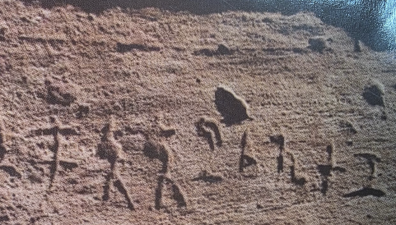
Ancient inscriptions in Tamil Brahmi, Prakrit and Sanskrit have been identified in tombs of the Valley of the Kings in Egypt, offering fresh evidence of contact between the Indian subcontinent and the Roman world. The markings, dated to the 1st to 3rd centuries CE, were documented across six tombs in the Theban Necropolis and are linked mainly to visitors from southern India, along with some from north-western and western regions.
Discovery in the Theban Necropolis
The inscriptions were recorded during field study work in 2024 and 2025. The researchers identified nearly 30 Indian inscriptions and graffiti carved on tomb walls and corridors. These appear alongside a much larger body of Greek graffiti, suggesting that Indian visitors followed an existing custom of leaving names and marks in the tombs.
Nature of the Inscriptions
Most of the inscriptions are brief and personal. They include names such as Cikai Koṟraṉ, Kopāṉ, Cātaṉ and Kiraṉ. One phrase reads Kopāṉ came and saw. The name Cikai Koṟraṉ appears repeatedly across five tombs, including at an entrance nearly four metres high. Scholars note that the name has strong Tamil features and possible links to Sanskrit and warrior traditions.
Historical and Epigraphic Significance
The findings add to evidence of long-distance maritime and overland connections between ancient Tamilagam, the Malabar Coast and the Roman Empire. Similar names have been found in Tamil Nadu and at Berenike, a Red Sea port. The inscriptions also connect with Sangam literature and earlier Tamil epigraphic material from Chera territory, strengthening the case for active movement of people and goods across the Indian Ocean.
Broader Implications for Ancient Trade
The discovery shifts attention from Red Sea ports to the Nile valley and expands understanding of Indian presence in Egypt. It also marks the role of Tamil-speaking traders and travellers in wider Afro-Eurasian exchange networks during the early centuries of the Common Era.
Last Modified: April 28, 2026