
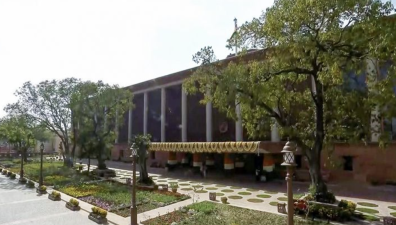
Prime Minister Narendra Modi’s new office complex, Seva Teerth, has been designed in the Indian architectural tradition. The move marks a symbolic shift away from the colonial legacy associated with South Block, which he vacated. The building combines traditional forms, local materials and climate-responsive features to create a modern institutional space rooted in Indian heritage.
Architectural Design
Seva Teerth uses white and red sandstone, a material palette seen in historic Indian civic and institutional buildings. The choice gives the structure a durable appearance and places it within a familiar cultural context. The design aims to blend continuity with modern functionality.
Traditional Motifs and Features
The building includes metal-clad domes inspired by the Buddha Stupa. These are used as contemporary accent elements and are intended to improve durability and reduce maintenance. The façade also uses screens to filter natural daylight into office spaces. These screens reflect a traditional Indian architectural device that balances light, ventilation and privacy.
Temple-Inspired Elements
The entrance portal draws inspiration from the stone screenwork of Chalukyan temples of the 11th to 13th centuries. The Chalukyan tradition is known for ornate carvings and architectural refinement. A carved stone plinth band is inspired by the base mouldings of the 12th-century Chennakeshava Temple in Belur, Karnataka. The floral and geometric motifs have been simplified for contemporary use while retaining the essence of traditional craftsmanship.
Historical and Cultural Significance
The design of Seva Teerth reflects a broader effort to connect modern governance spaces with India’s architectural heritage. The Chennakeshava Temple, a UNESCO World Heritage site, is dedicated to Lord Vishnu and was consecrated in 1117 AD by King Vishnuvardhana. The new office complex therefore combines symbolism, heritage and functional design in one institutional structure.
Last Modified: April 28, 2026